
Difference Between Garba and Dandiya Explained Clearly
Is there any difference between Garba and Dandiya? Both dances are cultural, woven into the nine-night festival of Navratri, and are sometimes confused as such. Both Garba and Dandiya have similarities but also some differences in terms of their origin, meaning, style, and significance.
Both dances are cultural, woven into the nine-night festival of Navratri, and are sometimes confused as such. In some ways, Garba and Dandiya share similarities, but also have some differences in their origin, meaning, style, and significance.
What Is Garba?
Garba is a traditional folk dance of Gujarat for the worship of Goddess Durga during the occasion of Navratri. The term Garba is derived from Sanskrit Garbha, which means womb’ or ‘life’ as the creation and the Divine feminine energy.
Whirl around a picture of Goddess Durga. The circle is a symbol of birth, death, and rebirth.
History of Garba
The roots of Garba are extremely ancient and have existed in Gujarat for several centuries. In the past, women used to dance this devotional dance to the Mother Goddess.
The main light in the traditional Garba is a symbol of life and Divine energy. The dancers go around the lamp as a symbol that all life is one with the Divine.

What Is Dandiya?
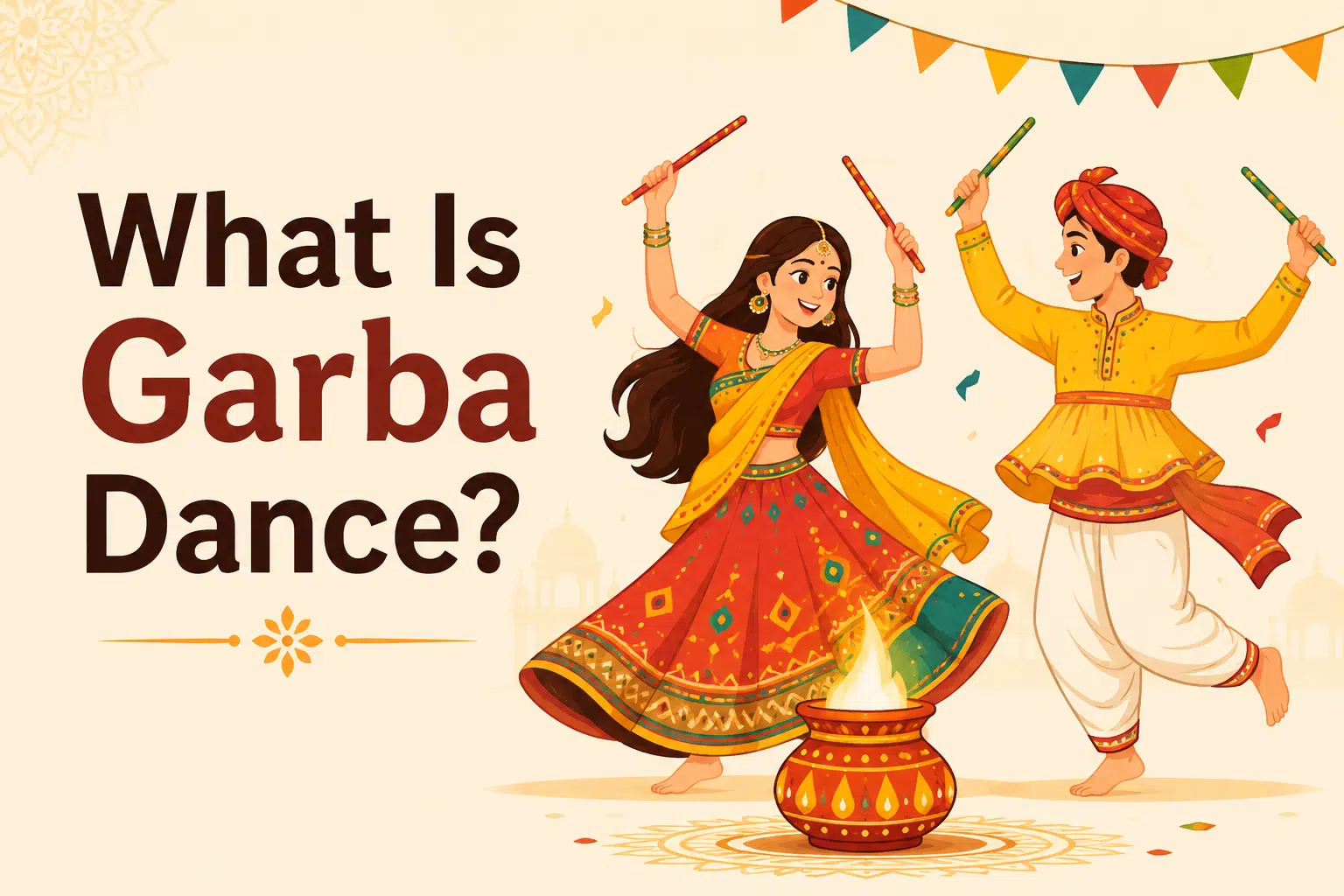
Navratri is celebrated with much pomp and show in Gujarat, and another popular folk dance is Dandiya – also known as Dandiya Raas. Dandiya is not garba, and is played with coloured wooden sticks known as dandiyas.
The sticks are the sword of Goddess Durga and are a symbol of her legendary fight with demon Mahishasura. As they dance, they beat their sticks in rhythm to each other and make the spirit of this mythological victory.
History of Dandiya
The roots of Garba are extremely ancient and have existed in Gujarat for several centuries. In the past, women used to dance this devotional dance to the Mother Goddess.
The main light in the traditional Garba is a symbol of life and Divine energy. The dancers go around the lamp as a symbol that all life is one with the Divine.

Garba vs Dandiya: Dance Style
Garba Dance Style
The circular movements, the pattern of the claps, and the synchronism in the footwork are all characteristics of Garba. The dancers are dancing around a central point while maintaining the rhythm in conjunction with the traditional songs and drums.
Dandiya Dance Style
It is more dynamic and interactive in dandiya. Participants dance with partners and make rhythm using sticks.

Can Beginners Learn Garba and Dandiya?
Yes. Garba and Dandiya are easy to learn.
Tips for Learning Garba
- Here are some tips on Garba that might help when learning it.
- Learn simple circular movements
- Practice maintaining rhythm
- Join community dance sessions
Tips for Learning Dandiya
- Begin with basic stick movements
- Focus on timing and coordination
- Music Used in Garba and Dandiya
- Gradually increase speed
Music Used in Garba and Dandiya
Music plays a crucial role in both dance forms.
Garba Music
Traditional Garba songs are devotional and focus on praising Goddess Durga. The music often includes:
- Dhol
- Tabla
- HarmoniumTraditional
- Gujarati vocals
The rhythm starts slowly and gradually builds momentum throughout the evening.
Dandiya Music
Dandiya music tends to be faster and more energetic.
Modern Dandiya events frequently combine:
- Traditional folk music
- Bollywood songs
- Contemporary fusion tracks
- High-energy percussion
This combination creates an exciting atmosphere that encourages participation and celebration.
FAQS
Differentiate between Garba and Dandiya.
Two devotional dances are done in Garba and Dandiya, in which partners are used for the circular dance and stick dance.
Are Garba and Dandiya the same?
No, these are two different forms of dance, honoured during Navratri.
Which is first, Garba or Dandiya?
In the traditional method of celebration, Garba is played before Dandiya.
Why are sticks in Dandiya?
They are the weapons of Durga, and the triumph of good over evil.
Is Garba a religious dance?
Yes, Garba is conducted in the name of Durga Bhai, the Goddess.
Read Also: Best Diwali Wishes for Family & Friends in 2026
Final Words
The purpose, style, and meaning of Garba and Dandiya are different. Garba is a devotional dance to be performed in honour of Durga, while Dandiya is a lively stick dance which symbolises good over evil. Both have great significance in the celebration of Navratri and are a reflection of the rich culture of the state of Gujarat.
Both dance forms are unique, colourful, and enjoyable, making them an essential part of Navratri celebrations around the world. Whether you prefer the graceful rhythm of Garba or the lively energy of Dandiya, both offer an unforgettable cultural experience.