What Is Garba Dance? Meaning, History & Navratri Guide
Why is the Garba dance regarded as one of the most popular folk dances of India? The festival of Navratri is a colourful celebration of 10 days preceding and following on Ashwin Sukla Poornima in the month of Ashwin in a horrific fashion, and millions participate worldwide in performing the traditional Gujarati Garba Dance, in which people clap rhythmically and perform very energetic dance with energetic movements with various poses, beautifully dressed in colourful and bright dresses.
This is a full article containing information about the Garba Dance, its meaning, symbolism, traditions, and how it is still so popular among millions today.
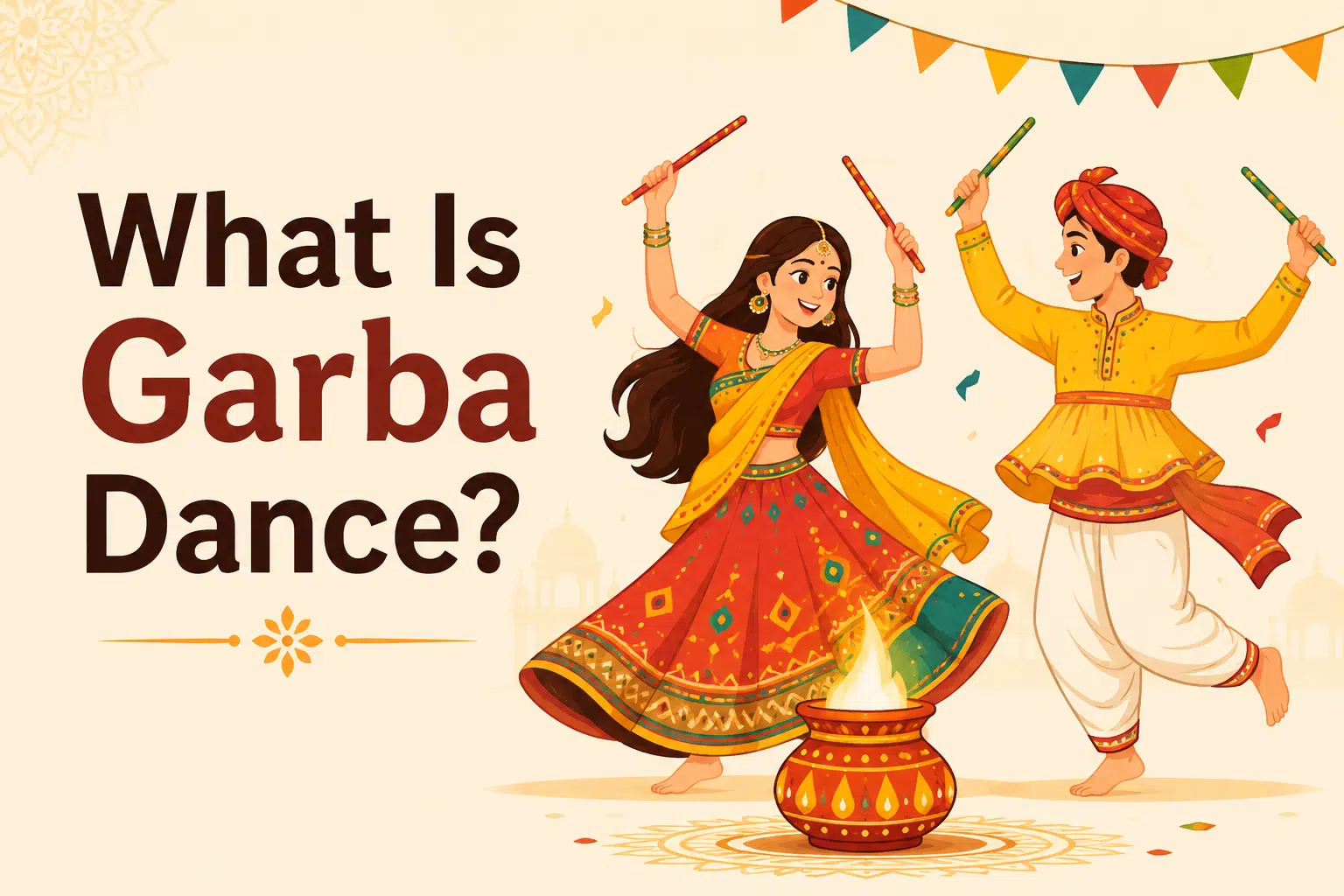
What Is Garba Dance?
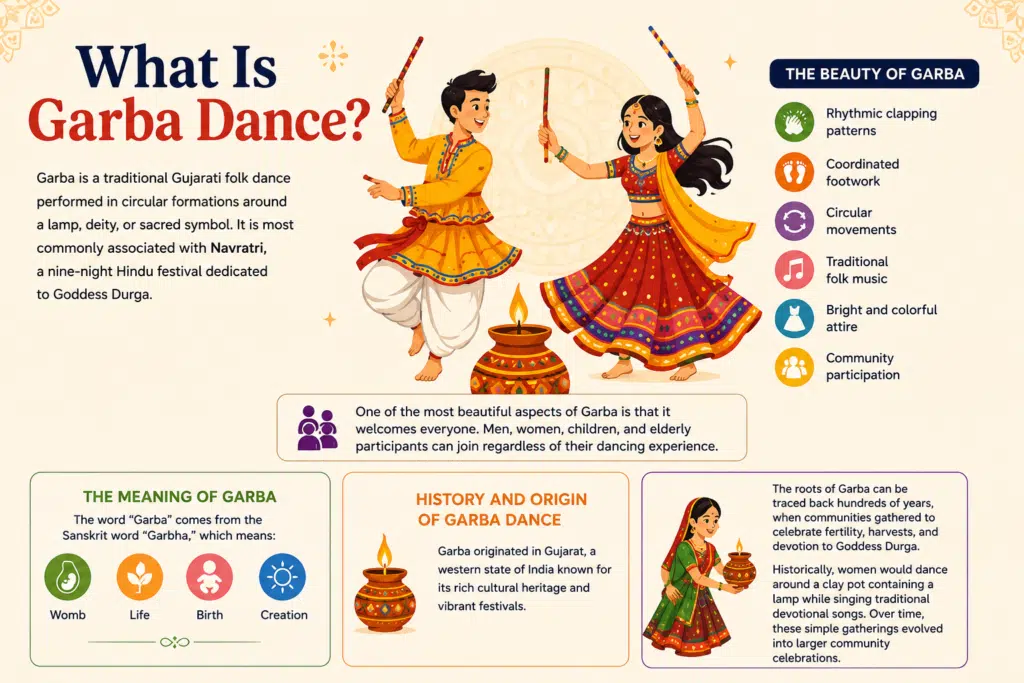
Garba is a traditional folk dance of Gujarat that is danced around a lamp, deity, or sacred symbol. It’s mostly used during Navratri, the festival which is celebrated in honour of Goddess Durga and those gods with her for nine days.
The dance is characterized by:
- Rhythmic clapping patterns
- Coordinated footwork
- Circular movements
- Traditional folk music
- Bright and colorful attire
- Community participation
Men, women, children, and the elderly may partake, regardless of their dancing experience.
The Meaning of Garba
To truly understand Garba, it is important to grasp its meaning.
The word Garba comes from the Sanskrit word Garbha, which means:
- Womb
- Life
- Birth
- Creation
History and Origin of Garba Dance
It is believed that Garba came from the western state of Gujarat, in India, which has a rich culture as well as vibrant festivals.
The timelessness of Garba is experienced thousands of years ago when the people used to make garba to celebrate fertility, harvest, and loyalty towards Goddess Durga.
In the past, women would circle a clay pot with a lamp and sing devotional songs. These informal events grew into more community events over time.
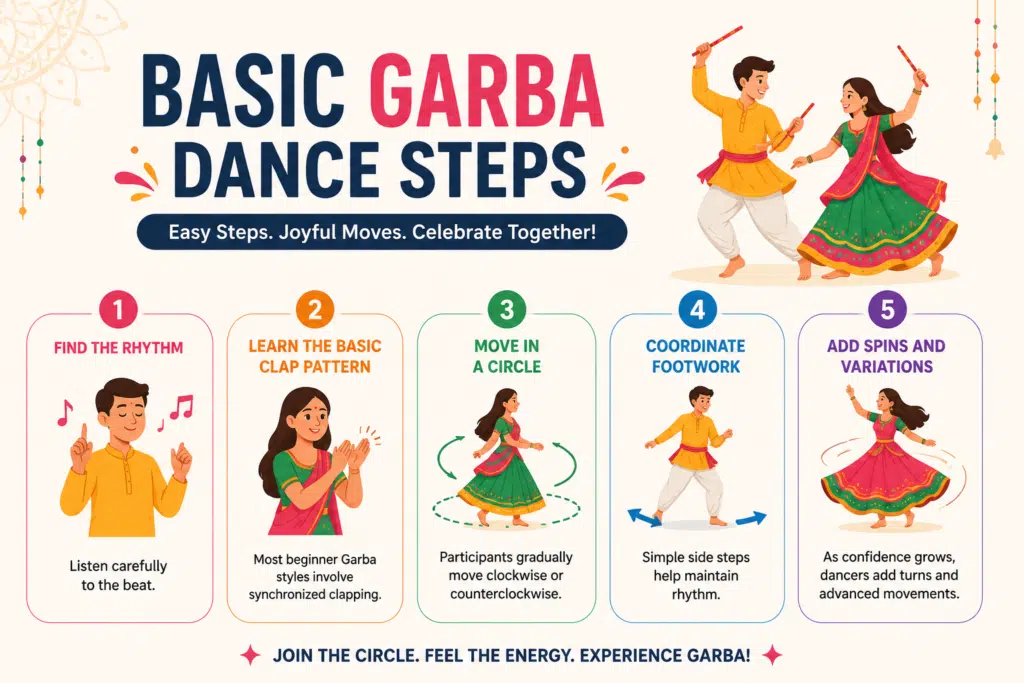
Basic Garba Dance Steps
Step 1: Find the Rhythm
Be sure you listen attentively to the beat.
Step 2: Learn the Basic Clap Pattern
In most of the beginner Garba styles, there is synchronization of clapping.
Step 3: Move in a Circle
The participants slowly move around the circle clockwise or counterclockwise.
Step 4: Coordinate Footwork
Make use of simple side steps to preserve the rhythm.
Step 5: Add Spins and Variations
As confidence increases, dancers add turns and higher-level movements.
Cultural Significance of Garba Dance
Garba is more than entertainment! It has a great function to ensure the continuity of traditions and to reinforce communities.
1. Symbol of Unity
Garba is a mix of various groups, age levels, and classes.
2. Celebration of Feminine Power
The dance is in recognition of Goddess Durga, and the idea of Shakti or Divine Feminine Energy.
3. Preservation of Heritage
Garba contributes to the passing down of tradition, music, and cultural values from one generation to the next.
4. Community Bonding
Relatives, friends, and neighbors come together to enjoy the festivities as a family.
5. Spiritual Expression
They engage in devotion and worship via dance.
Read Also: Happy Diwali WhatsApp Images HD Download for 2026
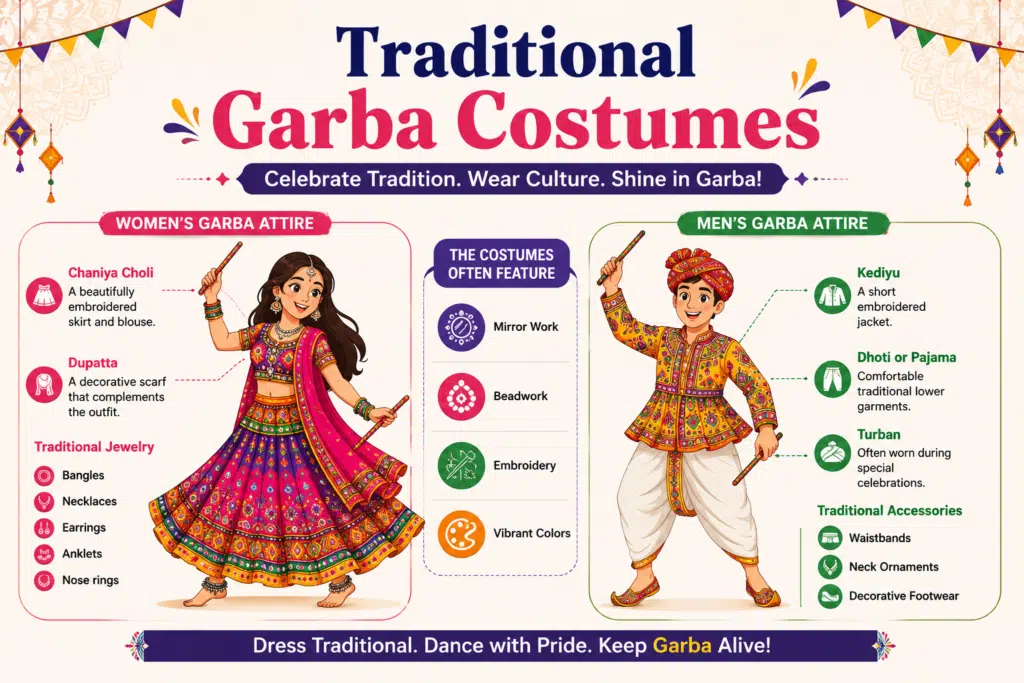
Traditional Garba Costumes
The presence of participants who dress in traditional costumes in different colors is one of the most eye-catchy feature of Garba.
Women’s Garba Attire
Women traditionally wear:
Chaniya Choli
An Embroidered Skirt and Blouse made in such an elegant way.
Dupatta
A good accent scarf that would go nicely with the clothes.
Traditional Jewelry
- Bangles
- Necklaces
- Earrings
- Anklets
- Nose rings
The costumes often feature:
- Mirror work
- Beadwork
- Embroidery
- Vibrant colors
Men’s Garba Attire
Men commonly wear:
Kediyu
A short embroidered jacket.
Dhoti or Pajama
Comfortable traditional lower garments.
Turban
Often worn during special celebrations.
Traditional Accessories
- Waistbands
- Neck ornaments
- Decorative footwear
Music and Instruments Used in Garba
Music is at the heart of every Garba celebration.
The devotional and lively traditional Garba songs get the dancers going for hours of dancing.
Common instruments include:
- Dhol
- Tabla
- Harmonium
- Shehnai
- Manjira
- Dholak
Modern Garba events may also include:
- Electronic music
- DJs
- Fusion compositions
- Contemporary folk remixes
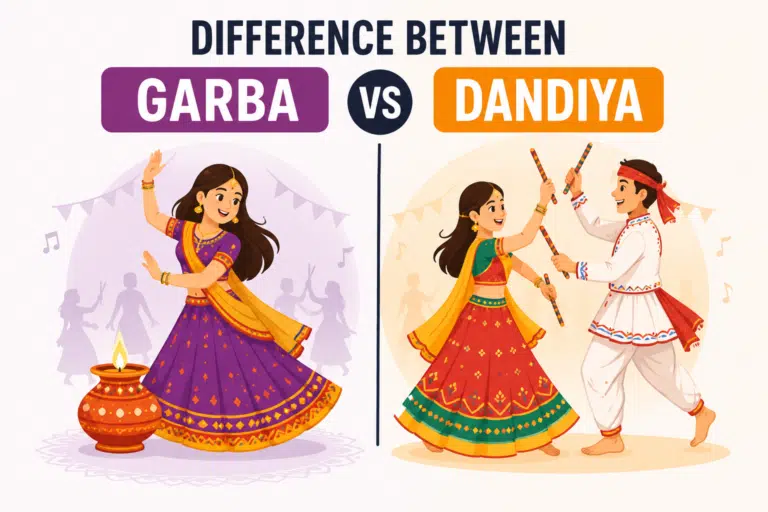
Garba vs Dandiya: What’s the Difference?
| Feature | Garba | Dandiya |
|---|---|---|
| Origin | Gujarat | Gujarat |
| Main Focus | Devotional Dance | Celebratory Dance |
| Equipment | Clapping | Wooden Sticks |
| Formation | Circular | Partner-Based |
| Symbolism | Worship of Goddess Durga | Victory of Good Over Evil |
| Music Style | Traditional Folk | Faster Rhythmic Music |
Held in many people’s homes, these Navratri celebrations feature the Garba and Dandiya.
Where Is Garba Popular?
Garba is celebrated across:
India
- Gujarat
- Maharashtra
- Rajasthan
- Delhi
- Madhya Pradesh
Internationally
- United States
- Canada
- United Kingdom
- Australia
- New Zealand
- United Arab Emirates
Over the years, there have been big international Garba festivals that draw thousands of people at an annual rate.
Is Garba Only Performed During Navratri?
No.
The main time for Navratri is also the main time for Garba (Harisinghath and Nawratri), but it is also done during the following occasions:
- Weddings
- Cultural festivals
- Community events
- College celebrations
- International Indian festivals
But, amongst all the periods of Navratri, the most significant and traditional time for Garba is.
The Global Popularity of Garba Dance
In more recent times, the Garba has spread around the globe and has gained significant cultural presence.
It has become popular because of several factors:
- Growing Indian diaspora communities
- Social media exposure
- International cultural festivals
- Bollywood influence
- Global interest in traditional dance forms
In the present times, Garba is a symbol of Indian culture and heritage all over the world.
Read Also: What Is Diwali? Meaning, Traditions & History Guide
Final Thoughts
Garba dance is not a traditional Gujarat conservative dance. It’s all about life, faith, culture, and community. Yet over a thousand years of heritage and tradition, Garba remains a means to connect millions of folks in tradition, movement, and song.
In one form or another, the significance of Garba has increased from the basic earthen lamp to massive gatherings the world over, and there is still some of its cultural food for the eyes.