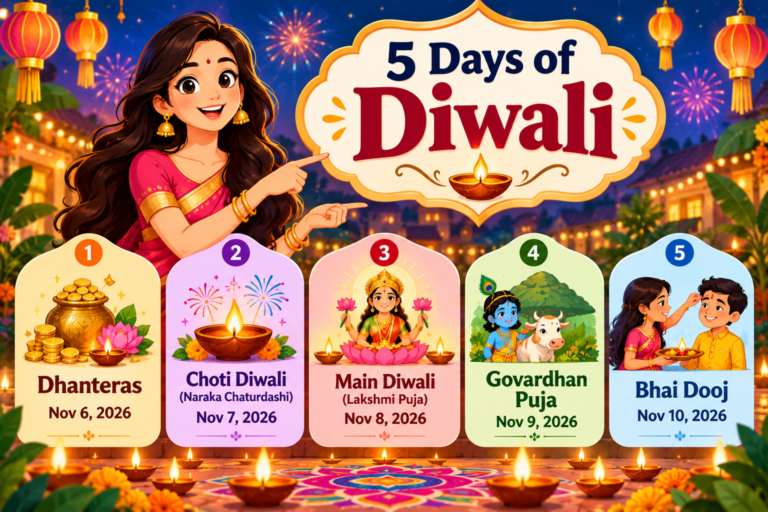

Why Is Diwali Important? Hindu Meaning & Traditions Guide
Why is Diwali significant to the Hindus all over the world? Diwali is not a festival of lights, sweets, and fireworks; instead, its spiritual and cultural significance, and historical significance of its own. To millions of Hindus, the lion is a symbol of hope, renewal, and good amidst evil.
In this guide, you will learn how and why Hindus observe Diwali, the stories of Diwali, the meaning of this festival, cultural observations of this festival, and how it is celebrated in modern times.
What is Diwali?
Deepavali” denotes a line of lights which comes from the Sanskrit word deepa which means light, and avali, meaning “row”. It symbolizes the enlightenment of the lamps to bring light to dispel darkness and a positive spirit.
Diwali is among the most crucial festivals for the Hindus, and thus it represents happiness, unity, and is marked by prayers, families, decorations, customs, and so on.
Why Do Hindus Celebrate Diwali?
Hindus celebrate Diwali for the following reasons, among which there are a few religious and cultural reasons: Many ancient scriptures, myths, spiritual, and esoteric beliefs are prevalent throughout the festival.
Return of Lord Rama to Ayodhya (Ramayana Story)
Lord Rama’s return after being exiled for 14 years is undoubtedly the most favourite reason for Diwali. The celebration of Diwali can be attributed to several reasons; one such reason is that after 14 years in exile, Lord Rama returns to his kingdom.
After killing the demon king Ravana, Lord Rama, together with Sita and Lakshmana, went back to his kingdom of Ayodhya as per the epic Ramayana. The residents of Ayodhya also welcomed them with rows of oil lamps (diyas) lit to mark the occasion of their arrival and celebrate with joy and triumph.
This is why Diwali is often seen as the celebration of:
- The return of justice and rectitude.
- A tale of the triumph of right over wrong.
- The first indications of peace and prosperity.The beginning of peace and prosperity.
Even today, Lighting of diyas is a sign of bringing light into life.
Worship of Goddess Lakshmi
The other reason for the celebration of Diwali among the Hindus is to pay homage to their goddess Lakshmi, the goddess of wealth, prosperity & fortune.
Diwali Night is also known as Lakshmi Puja, when families worship the goddess in order to give their houses a good blessing of plenty.
Important beliefs include
- Positive energy attracts clean homes
- Light symbolizes prosperity
- Prayer brings financial and spiritual growth
This tradition connects Diwali with both spiritual and material well-being.
Victory of Good Over Evil
Diwali also carries a universal message – good triumphs over evil. This is interpreted in different ways in different parts of India, but the gist of the message is the same.
It reflects:
- Light over darkness
- Knowledge over ignorance
- Hope over despair
That’s the reason Diwali has immense significance not only as a religious festival but also as a philosophical one.

Historical and Religious Importance of Diwali
The celebration of Diwali is one of the oldest Indian festivals of culture mentioned in the Hindu scriptures and historical records of the world.
Diwali was also known in ancient India as:
- Harvest celebrations
- Commercial and trading opportunities for new ventures
- Spiritual purification rituals
Some Diwali stories and traditions, such as those in the Puranas, which connect Diwali with other divine stories, make it a multi-dimensional festival, but, on the other hand, various Hindu stories and traditions are often identified with it.
It is also referred to as the festival of this event, where other gods were worshipped, other historical events were remembered, and it shows the diversity in cultural practices and festival celebrations around this event in India and Nepal as well.
How Diwali is Celebrated
Diwali is a mixture of religious festival celebrations. Either one or the other of these traditions fulfills a purpose, and it has meaning.
Cleaning and Decoration
Individuals prepare traditional sweets like laddoos, barfi and jalebi. Religious Puja Ritual.
- Removing negativity
- Welcoming prosperity
- Starting fresh
Light, flowers, and Rangoli designs are used to decorate homes.

Lighting Diyas and Fireworks
Lighting diyas is the heart of Diwali. These lamps represent:
- Inner enlightenment
- Spiritual awakening
- Removal of darkness
Fireworks are used for the celebration of happiness and unity, although a new celebration is being introduced to practice eco-friendly methods.
Family Gatherings and Sweets
Diwali is also a time for:
- Reuniting with family
- Giving sweets and gifts
- Strengthening relationships
Traditional sweets like laddoos, barfi, and jalebi are made by people. Religious Puja Rituals
Religious Puja Rituals
In most Hindu homes, the Lakshmi Puja is held. People pray for:
- Wealth
- Health
- Happiness
- Success
One of the most important rituals of the Diwali night.
Regional Variations of Diwali Celebration
Diwali is celebrated in different ways in different parts to highlight the diversity in Hindu culture.
North India: Ramayana Celebration
Diwali is very much associated with Lord Rama’s return to his kingdom in North India.
South India: Krishna and Narakasura Story
Diwali is also known as the festival of Lord Krishna’s victory over the demon Narakasura, which is considered a symbol of triumph over evil forces in South India.
Nepal: Tihar Festival
Diwali is also recognized in Nepal as Tihar, and animals too are revered, including cows, dogs, and crows, which represent a harmony of human beings with nature.
Spiritual Meaning of Diwali
However, Diwali is not only a celebration of the rituals and festivities, but there is also great significance given to the religious aspect as well.
It teaches:
- Understanding the significance of inner light.Awareness of the meaning of inner light.
- Life without negativity
- Self-improvement and discipline
- Living in the positive and the truth
Diwali preaches: “Light the lamp within you, that is to say, inspire wisdom and kindness.”
Frequently Asked Questions (FAQs)
1. What is the name of the festival celebrated during Diwali?
In the name of the triumph of light over darkness, people light lamps and candles.
2. Is Diwali celebrated by the Hindus?
No, the SIKHS, Jains, and BUDDHISTS also honour it specially.
3. Why is Diwali celebrated?
Chosen by popular demand is the scene of Ravana getting slain by Lord Rama and attaining Mercy Films Lord Rama’s Deification on his return to Ayodhya.
4. Why is it that people worship Goddess Lakshmi at Diwali?
She has wealth aplenty and was interviewed about having goodwill for homes on Diwali night.
5. What did God teach you about Diwali in these verses?
It’s the lesson of the purity of the soul, positivity, and the overcoming of negativity.
Read Also: Best Diwali Wishes for Family & Friends in 2026
Final Words
Diwali is a festival of celebration of life, truth, and spiritual awakening. Diwali is a reminder of the good of virtues overcome evil. The worship of Goddess Lakshmi, symbolic diya lighting, in the story of Lord Rama.
You have discovered how Diwali is a festival of celebration, as well as a message of hope, unity, and positivity to all.