5 Days of Diwali 2026: Dates, Names & Celebrations
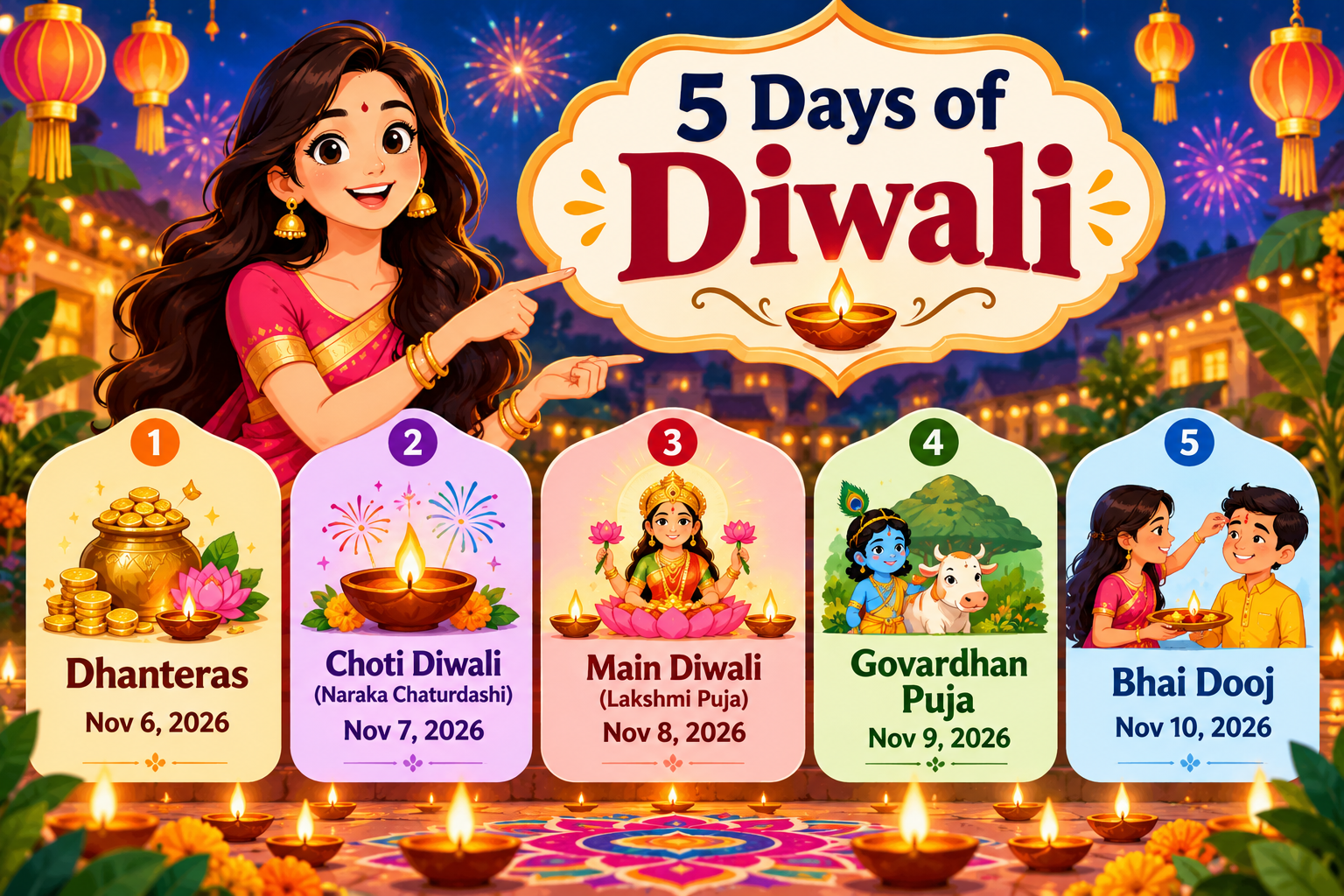
5 Days of Diwali 2026 is a five-day festival celebrated by offering prayers, lighting diyas, performing traditional ceremonies, meeting with family & friends, playing, sharing food, giving gifts, and celebrating with cultural practices. The five days start with Dhanteras on Friday, the 6th of November 2026, Choti Diwali (Naraka Chaturdashi) on November 7th, Main Diwali and Lakshmi Puja on November 8th, Govardhan Puja on November 9th, and Bhai Dooj on November 10th, 2026.
This is a guide to the 5 Days of Diwali in 2026, including their dates, names, stories, religious meaning, celebrations, rituals and traditions, symbols, and how the celebrations can vary around the world and within the family.
What Are the 5 Days of Diwali?
The five days of Diwali are said to be celebrated as:
- Dhanteras
- Naraka Chaturdashi, also called Choti Diwali
- Diwali or Lakshmi Puja
- Govardhan Puja
- Bhai Dooj
Here is the five-day sequence to give an overview of festival life. The significance of Dhanteras is prosperity and preparation; Choti Diwali is about washing away the impurities and the killing of Narakasura; and the main Diwali night, when Lakshmi Puja is performed and diyas are lit, is about Govardhan Puja.
5 Days of Diwali 2026
| Day | Date in 2026 | Festival | Main Significance |
|---|---|---|---|
| Day 1 | Friday, November 6 | Dhanteras | Prosperity, health, new purchases, and preparation |
| Day 2 | Saturday, November 7 | Choti Diwali / Naraka Chaturdashi | Purification and the victory of good over evil |
| Day 3 | Sunday, November 8 | Diwali / Lakshmi Puja | Main Diwali celebration, lights, Lakshmi Puja and family festivities |
| Day 4 | Monday, November 9 | Govardhan Puja | Krishna, Govardhan Hill, gratitude and abundance |
| Day 5 | Tuesday, November 10 | Bhai Dooj | The bond between brothers and sisters |
Day 1: Dhanteras — November 6, 2026
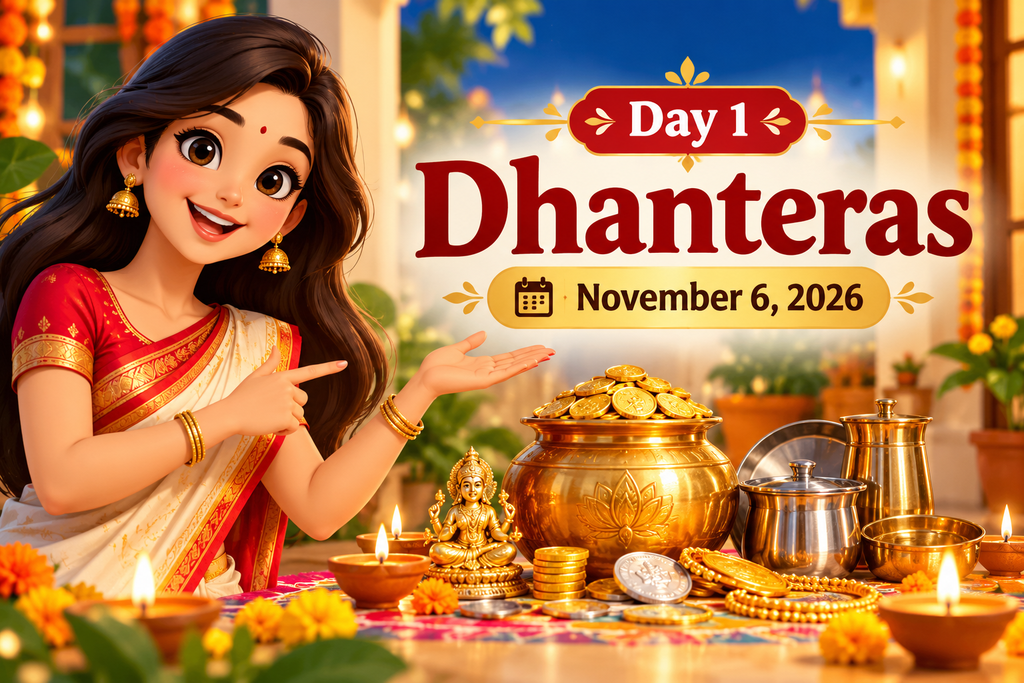
Dhantrayodashi is also known as Dhanteras, which is the first day of the Diwali festival.
Typically, it’s translated as ‘wealth of the 13th lunar day’ in reference to wealth and the 13th day of the lunar month. It’s a day of good luck, good health, good buying, and preparation for Diwali.
Dhanteras is also believed in Hindu belief to hold a connection with Lord Dhanvantari, the Guardian of Ayurveda and health. It is believed that Dhanvantari appeared among the demigods to give out some amrita, the nectar of immortality, a pot of which he carried on his neck, while the cosmic ocean was churning.
How Is Dhanteras Celebrated?
Individuals can also buy objects that are meant to be lucky, such as:
- Gold or silver
- Jewellery
- New utensils
- Metal objects
- Household items
- Diyas and Puja supplies
Many families don’t have the means to purchase an item that’s extra expensive. It symbolizes health, wealth, abundance, and a good start to the holiday season.
Day 2: Choti Diwali / Naraka Chaturdashi — November 7, 2026
The second day is called Naraka Chaturdashi, which is also referred to as Choti Diwali, which means “Little Diwali.”
It is marked on the day leading up to the main day of Diwali and is a Mental note of the defeat of an erstwhile dreadful demon named Narakasura, which is believed to have been slain by Lord Krishna himself.
Why Is It Called Choti Diwali?
The title of “Choti Diwali” translates to English as “Little Diwali.” It is so called because it happens before the major observance of Diwali, and its significance is generally believed to be less in many other parts of the world.
In this case, however, local customs do play a part. In certain areas of India, especially southern India, the celebration of Naraka Chaturdashi holds significance and can be considered the main Diwali day of celebration.
Day 3: Main Diwali and Lakshmi Puja — November 8, 2026
The large-scale celebration of Diwali takes place on Sunday, November 8, 2026, in this 5-day celebration.
This is the day most people have in mind when they simply say “Diwali.”
The third day is related to Lakshmi Puja, lighting of diyas, rangoli, gathering of the family, traditional sweets, prayers, decorations, and, where permissible and practiced, fireworks.
Diwali is celebrated on the night of the new moon or Amavasya; otherwise, it is called Karthik Amavasya. According to the government, the third day is the principal day of the festivities when people light diyas, pray to Goddess Lakshmi and Lord Ganesha, put their offerings, and plead for luck, prosperity, and long life at her and his feet.
Why Is Lakshmi Worshipped on Diwali?
Wealth, Prosperity, Abundance and Good Fortune are known to be the attributes of goddess Lakshmi.
Families can clean and decorate their homes, set up a place for worship, offer flowers and other items, and light lamps during Lakshmi Puja.
It is not merely about the monetary value that is at stake. Prosperity can also be defined more expansively as good fortune, well-being, and a prosperous household.
Diwali Decorations and Rangoli
Many families will decorate the house for the celebration.
Common decorations include:
- Diyas
- Candles
- String lights
- Flowers
- Torans
- Rangoli
- Decorative lamps
Rangoli is a traditional art used for decoration of the floor, commonly at the entrance. You can create designs from colored powders, rice, flowers, or any other material you choose.
Day 4: Govardhan Puja — November 9, 2026
On the fourth day, it is Govardhan Puja or Annakut, as it is called in some traditions.
It is associated with Lord Krishna and Govardhan Hill.
The Story Behind Govardhan Puja
The population of Vrindavan was organizing the worship of the god of rain and storms, Indra, on a regular basis, as per mythology. Krishna tried to awaken the awareness of the community to the significance of Govardhan Hill, nature, agriculture, and the ashram’s cows, who were their living source.
The story is the basis of Govardhan Puja, and it is related to protection, gratitude, and respect towards nature.
What Is Annakut?
The word ‘Annakut’ is a local Hokkien term for ‘mountain of food’.
Devotees make many types of food and arrange them as an offering in traditionally observed traditions.
The offering can include:
- Rice
- Vegetables
- Sweets
- Fruits
- Savory dishes
- Grains
- Regional foods
The size and nature of Annakut range from temple to temple and from family to family.
Day 5: Bhai Dooj — November 10, 2026
The fifth and final day is Bhai Dooj — a day of brother-sister relationship.
Also referred to by other names in various parts of the country, like Bhau Beej and Yama Dwitiya.
What Happens on Bhai Dooj?
The usual celebration of Bhai Dooj is when a sister draws a tilak on her brother’s forehead and prays for his health and longevity.
Brothers can present gifts to their sisters, and family members can join in eating together.
The day, then, has a newly changed purpose of the Diwali celebration with emphasis on the importance of relationships and sibling love.
According to the Government of India, Bhai Dooj is the fifth day and points out the practice of the sisters’ tika and prayers for their brothers’ long and happy life, and brothers give gifts in return.
The Story of Yama and Yamuna
Bhai Dooj is traditionally connected with the story of Yama, the deity associated with death, and his sister Yamuna.
According to the traditional account, Yamuna welcomed Yama, offered him food, and applied a ceremonial mark to his forehead.
The story is associated with the affection between siblings and helps explain the importance of the Bhai Dooj ceremony in many traditions.
5 Days of Diwali 2026 Calendar
These are the actual dates for this guide:
| Date | Day | Diwali Festival |
|---|---|---|
| November 6, 2026 | Friday | Dhanteras |
| November 7, 2026 | Saturday | Choti Diwali / Naraka Chaturdashi |
| November 8, 2026 | Sunday | Main Diwali / Lakshmi Puja |
| November 9, 2026 | Monday | Govardhan Puja |
| November 10, 2026 | Tuesday | Bhai Dooj |
Do Diwali Dates Change Every Year?
Yes.
Diwali is not based on a fixed date in the Gregorian calendar as is normally known but rather follows the Hindu lunar calendar. This means that the date for Diwali varies year on year. As per the Government of India, Diwali falls on Amavasya and is likely to be in October or November.
However, the specific time to observe certain days may vary from place to place and from panchang to panchang.
For this reason, readers looking for exact Lakshmi Puja Muhurat, Abhyanga Snan timing or Bhai Dooj Puja timing should check a Panchang calculated for their own city.
How the 5 Days of Diwali Flow Together
A good way to think about the festival is to see it as a five-day trip:
Day 1 — Prepare
The first of the festive period, Dhanteras is a celebration of wealth, well-being, and good starts.
↓
Day 2 — Purify
Choti Diwali is all about getting rid of evil, renewing yourself, and ensuring good triumphs.
↓
Day 3 — Celebrate
The festival culminates with Diwali and Lakshmi Puja, the culmination of lights, prayers, and family festivals.
↓
Day 4 — Give Thanks
During Govardhan Puja, the emphasis is on Krishna, nature, food, protection and gratitude.
↓
Day 5 — Connect
The celebration culminates with Bhai Dooj, which reflects the relationship between brothers and sisters.
This series is one way this five-day festival feels rather bigger than its one-night length.
Important Symbols of the 5 Days of Diwali
There are numerous Diwali symbols, and the meaning of each may differ.
Diyas
Traditionally, diyas are made of clay and filled with oil or ghee to use for lighting. They represent the removal of darkness and the light of hope.
Rangoli
Rangoli is a decorative floor art usually made in living rooms, near entrances, and similar areas. It is ornamental and connotes auspiciousness and hospitality.
Lakshmi
Goddess Lakshmi is considered to be the embodiment of wealth, auspiciousness, and prosperity and is particularly significant during the biggest Diwali celebration.
Ganesha
At the time of Diwali, Lord Ganesha is celebrated along with the goddess Lakshmi, especially in the Lakshmi Ganesha puja rituals.
Gold and Silver
In many communities, Dhanteras is traditionally associated with precious metals, which represent prosperity and an auspicious beginning.
Annakut
Annakut is associated with Govardhan Puja, and it is a symbol of abundance, gratitude, and food offering, meaning “mountain of food”.
How Diwali Traditions Differ Across India
Each and every family celebrates Diwali in its own distinctive way.
What is known is the overall 5-day format, though there might be variations of the traditional practices based on place, family tradition, and religious belief, or the local technique for the Panchang calculation.
Naraka Chaturdashi is emphasized particularly in certain parts of India. Whereas Lakshmi Puja is next to the fore in other communities.
This regional diversity is an important part of Diwali’s history and cultural richness.
Are Diwali and Deepavali the Same?
Yes, Diwali and Deepavali generally refer to the same festival, although the names are used differently across languages and regions.
“Deepavali” is commonly explained as referring to a row or series of lamps, while “Diwali” is a widely used shortened form.
You may therefore see both spellings:
- Diwali
- Deepavali
- Deepawali
While the spelling of the festival may differ depending on language and location, it is all commonly linked to the Festival of Lights.
Read more: Diwali Festival Facts: 25 Fascinating Facts You Should Know
Frequently Asked Questions (FAQs)
What are the 5 days of Diwali?
The five days are Dhanteras, Naraka Chaturdashi or Choti Diwali, Main Diwali or Lakshmi Puja, Govardhan Puja, and Bhai Dooj.
What are the 5 Days of Diwali 2026?
For this guide, the five dates are:
- Dhanteras — November 6, 2026
- Choti Diwali — November 7, 2026
- Main Diwali — November 8, 2026
- Govardhan Puja — November 9, 2026
- Bhai Dooj — November 10, 2026
Which day is the main Diwali?
The third day (Main Diwali or Lakshmi Puja), is usually regarded as the pivotal day of the five days.
What is the first day of Diwali called?
The first day is Dhanteras or Dhantrayodashi.
Final Thoughts
The 5 Days of Diwali are not just five straight dates of a festival, but the celebration of five days of the festival throughout the state.
During Choti Diwali, there are stories of purification and the victory of good over evil. The highlight of the Diwali night is that the houses are filled with diyas, prayers, Lakshmi Puja, food, and celebration with family. Whereas Govardhan Puja takes the focus to Krishna, nature, food, and gratitude, Bhai Dooj ends the festival by celebrating one of the most pivotal relationships in the family: that of siblings.