Diwali Festival Facts: 25 Fascinating Facts You Should Know
Diwali, or Deepavali, is a significant festival celebrated in India and by the Indian community throughout the world, and it is a festival of lights. The festival known as Diwali marks the beginning of light over darkness, good over evil, renewal, prosperity, family, and spiritual celebration, and usually takes place in October or November in the Hindu lunar calendar. It is traditionally celebrated with rangoli, sweets, celebratory prayers, Lakshmi Puja, fireworks (in some communities), gifts, family feasts, and decorations, etc.
In this guide, you’ll come to know about 25+ facts that are worth learning about the Diwali festival, the meaning of the Diwali festival, the 5 days of Diwali, the religious significance of Diwali, popular Diwali festival facts and symbols, and Diwali festival celebration.
Diwali 2026 Countdown
Diwali 2026 Date: Sunday, November 8
See how many months, days, and hours are left until Diwali 2026.
What Is Diwali?
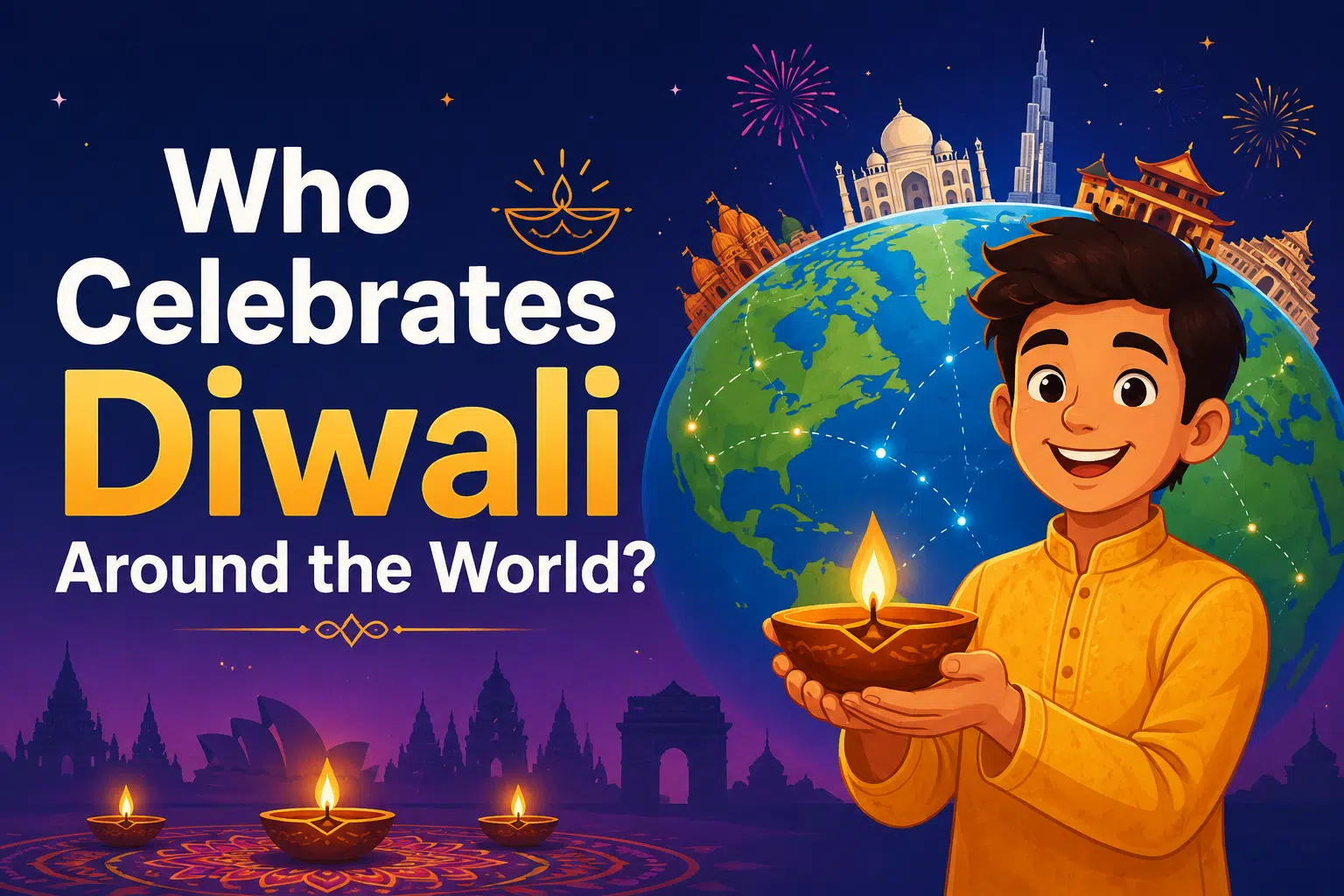
Its significance is enormous, with Diwali being celebrated as a major festival by millions of people all over the world, especially in India and the Indian diaspora.
The Sanskrit word is derived from terms related to the meaning of lights or lamps, which generally gives us the understanding of Deepavali, which is called Deepavali or a row of lights. It is celebrated around the dark star of the Hindu month of Kartika; thus, this festival may start on different days, which may vary from year to year.
| Diwali Fact | Details |
|---|---|
| Also known as | Deepavali, Deepawali, Dipavali and other regional forms |
| Common nickname | Festival of Lights |
| Typical time | October or November |
| Calendar | Based on the lunar calendar |
| Main symbol | The diya or oil lamp |
| Common traditions | Lighting lamps, prayers, rangoli, sweets, gifts, and family gatherings |
| Common Hindu association | Victory of light over darkness and good over evil |
| Important deity | Goddess Lakshmi is especially associated with prosperity during many Diwali celebrations |
| Five-day tradition | Dhanteras, Naraka Chaturdashi, Diwali, Govardhan Puja and Bhai Dooj |
| Other religious observances | Jain Nirvana Day and Sikh Bandi Chhor Divas are associated with the period |
| Global reach | Celebrated by communities in India and around the world |
| UNESCO status | Deepavali was inscribed on UNESCO’s Representative List in 2025 |
Why Is Diwali Celebrated?
There is no single story for all the celebrations of Diwali.
One of the best-known traditions connects Diwali with Lord Rama’s return to Ayodhya after 14 years of exile and his victory over Ravana.
Other traditions match up various days or local celebrations:
- Goddess Lakshmi and prosperity
- Lord Krishna’s victory over Narakasura
- Krishna and Govardhan Hill
- Lord Shiva’s victory over Tripurasura
- King Bali
- Kali Puja in eastern India
Diwali Festival Facts You Should Know
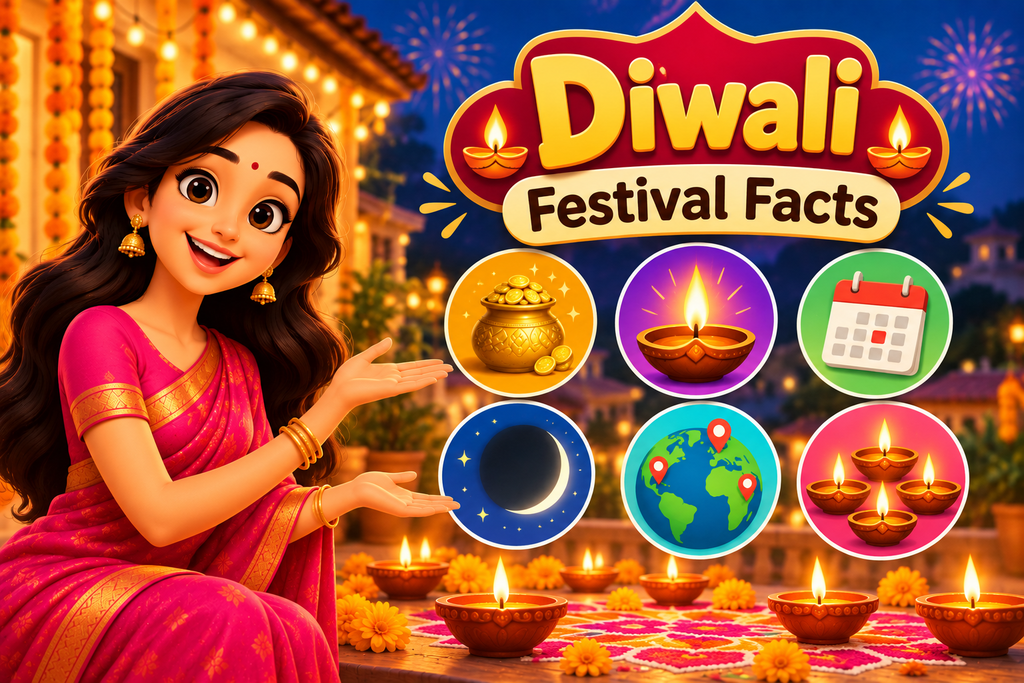
1. Diwali Is Also Called Deepavali
Another very common name for this Festival is Deepavali. Both “Diwali” and “Deepavali” are used, but there are regional variations.
The name reminds us of rows or arrangements of lamps, which is, of course, the most iconic practice for this festival: lighting houses, temples, and public places.
2. Diwali Is Known as the Festival of Lights
One of the most recognizable features of Diwali is the widespread use of light.
People may light:
- Diyas
- Candles
- Lanterns
- Decorative electric lights
Light has been universally associated with the power to conquer darkness and ignorance, and the power of hope, renewal, and goodness.
3. Diwali Is Not Celebrated Exactly the Same Way Everywhere
This is one of the more crucial points to keep in mind.
Diwali celebrations may vary in terms of:
- Region
- Family tradition
- Religious community
- Local culture
- Language
- Historical tradition
For instance, Kali Puja is of major importance in eastern parts of India, but in southern regions of India, more focus is placed on Naraka Chaturdashi.
It is therefore more accurate to see the festival as a family of practices collectively referred to as “Festival.
4. Diwali Usually Falls in October or November
Diwali follows a lunar calendar, so its Gregorian-calendar date changes every year.
For 2026, Diwali is listed on November 8 in India by India’s official tourism portal. International calendars can show different local dates in some countries because of time zones and local observance.
5. Diwali Is Associated With the New Moon
The main Diwali observance is traditionally associated with Amavasya, the new-moon day of the Hindu lunar calendar.
This helps explain why light has such a powerful visual presence during the celebration: lamps stand out dramatically against the darkness of the night.
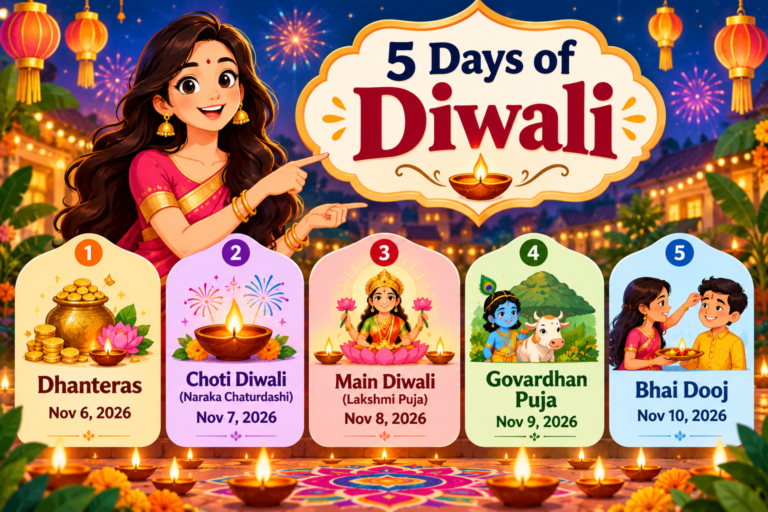
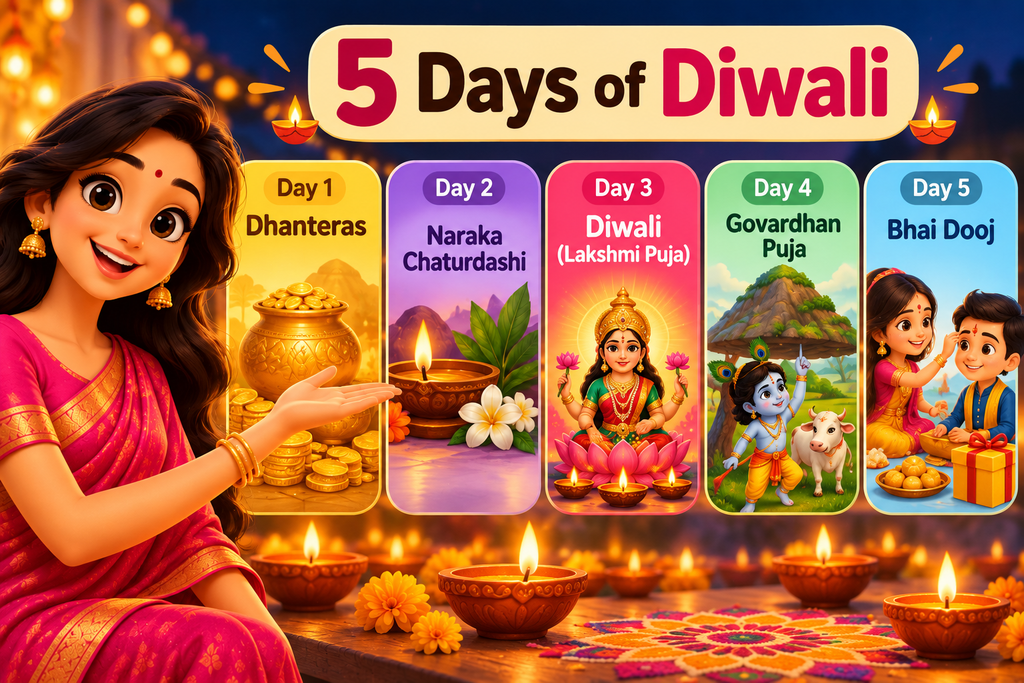
6. Diwali Is Commonly Celebrated Over Five Days
Many popular descriptions of Diwali refer to a five-day festival period.
The commonly described sequence is:
- Dhanteras
- Naraka Chaturdashi
- Diwali / Lakshmi Puja
- Govardhan Puja
- Bhai Dooj
However, regional traditions can extend beyond this five-day structure or emphasize different observances. India’s Ministry of Tourism describes Diwali as a five-day festival beginning with Dhanteras.
What Are the 5 Days of Diwali?
Day 1: Dhanteras
Dhanteras traditionally begins the commonly described five-day Diwali period.
The day is associated with prosperity, auspicious beginnings, and preparations for the festival. In many households, people clean and decorate their homes and may purchase items such as utensils, jewelry, or other goods considered auspicious.
Dhanteras is also associated with Dhanvantari in Hindu tradition.
Day 2: Naraka Chaturdashi
The second day is commonly known as Naraka Chaturdashi or Choti Diwali.
In traditions associated with this day, Lord Krishna’s victory over the demon Narakasura symbolizes the destruction of evil.
Regional customs vary, but may include:
- Early-morning bathing rituals
- Lighting lamps
- Preparing festive food
- Decorating homes
- Family celebrations
Day 3: Diwali and Lakshmi Puja
For many Hindu communities, this is the central night of Diwali celebrations.
Homes and businesses may be decorated with lamps and lights, families gather together, and many devotees perform Lakshmi Puja, seeking blessings associated with prosperity and well-being.
Day 4: Govardhan Puja
The fourth day is commonly associated with Govardhan Puja or Annakut in several Hindu traditions.
The celebration is connected with the story of Lord Krishna lifting Govardhan Hill to protect people from heavy rains.
Day 5: Bhai Dooj
The theme of Bhai Dooj is based on the relationship between brothers and sisters.
It is also customary to cover the brothers with the ceremonial tilak and pray for their health and brothers may also give gifts to their sisters.
As with all Diwali traditions, traditions vary regionally and in families.
Religious Significance of Diwali
Do Hindus Celebrate Diwali?
Yes. It is a very much part and parcel of Hindu traditions, and it is one of the big festivals celebrated by the Hindu communities.
Various locations might associate festivals with diverse tales and deities such as:
- Rama
- Sita
- Lakshmi
- Ganesha
- Krishna
- Kali
- Shiva
- Govardhan traditions
- King Bali
That is one reason why there is a regional diversity of explanations of Diwali.
Do Jains Celebrate Diwali?
Yes, but Jain Diwali has religious significance.
Diwali celebration is taken to be the attainment of nirvana by Lord Mahavira, the 24th Tirthankara for the Jains. Hence, it is celebrated as a great auspicious day for religious mysticism known as Nirvana Day.
This is an important distinction: one should not present the meaning of Diwali as being only of the Hindu tradition.
Read more: Best Diwali Quotes & Captions for 2026 Celebrations
How Diwali Is Celebrated Across India
An effective method to understand Diwali is to consider the varying aspects of it in different areas.
North India
Diwali also has a strong association with one of the northern traditions, the return of Rama to Ayodhya following his exile.
Homes adorned with diyas and lights, gatherings of family members, prayers, sharing of sweets, and the enactment of these traditions become especially intense.
Western India
There are certain unique Diwali traditions in Western India.
For some communities, the festival time is connected to:
- Lakshmi Puja
- New financial beginnings
- Business traditions
- Govardhan Puja
- Regional New Year observances
The exact customs differ among states and communities.
South India
Some of the southern Indian traditions emphasize Naraka Chaturdashi. Early morning rituals, oil baths, new clothes, sweets, decoration of lamps, and family gatherings can form a part of the Diwali celebration.
There is a strong Narakasura tradition at some southern festivities.
Popular Diwali Foods and Sweets
A significant aspect of Diwali is the food.
Sweets can be prepared or given by families & communities and include:
- Ladoo
- Barfi
- Jalebi
- Gulab jamun
- Kaju katli
- Peda
- Halwa
Diwali Traditions You May See
Some typical Diwali customs are:
Cleaning the Home
Families do clean and tidy their houses in advance of the festival.
This can be a symbol of new beginnings and a call to prepare for the new year or festive season.
Decorating Homes
People may use:
- Diyas
- Rangoli
- Flowers
- Candles
- Electric lights
- Decorative hangings
Wearing New Clothes
A lot of times, new or special attire is worn on festive occasions.
Exchanging Gifts
Gift exchanges are allowed with families, friends, neighbors, and businesses.
25+ Interesting Diwali Festival Facts at a Glance
Here is a quick list for readers who want the short version:
- Diwali is also called Deepavali.
- It is collectively known as the Festival of Lights.
- The date varies from one year to another, considering that it is based on the lunar calendar.
- Diwali is typically held in October or November.
- The celebrations are marked by the new moon.
- One of the most iconic emblems of the festival is the diya.
- There are many families that clean their homes before Diwali.
- Many families clean their homes before Diwali.
- Lakshmi Puja is important in many Hindu Diwali celebrations.
- Ganesha is also worshipped alongside Lakshmi in many traditions.
- Rama’s return to Ayodhya is one of the best-known Diwali stories.
- Naraka Chaturdashi is connected with Krishna’s victory over Narakasura in some traditions.
- Govardhan Puja is observed in several regions after Diwali.
- Bhai Dooj celebrates the bond between brothers and sisters.
- Jains associate Diwali with Mahavira’s nirvana.
- Bandi Chhor Divas is celebrated by Sikhs in line with the Diwali festival.
- Kali Puja coincides with Diwali in parts of eastern India.
- In eastern India, Kali Puja is celebrated along with Diwali.
- On Diwali, they can be decorated with sweets as well as savory food items.
- In some communities, fireworks will be a staple, whereas in other communities they will not be.
- The celebration of Diwali varies from place to place.
- Giving and receiving gifts and sweets.
- Lights and flowers can be set up at home and public buildings.
- The festival has important cultural as well as religious dimensions.
- The festival has not only religious importance but cultural as well.
- Deepavali was added to UNESCO’s Representative List of the Intangible Cultural Heritage of Humanity in 2025.
- The festival lasts for a few days of religious, social and cultural activities.
- The same seasonal period can have multiple narratives and meanings for various communities.
- Another aspect of many Diwali celebrations is the sharing of food and sweets.
- One of the most popular motifs of the festival is light overcoming darkness.
Diwali 2026: When Is Diwali?
India’s official tourism website states that Diwali 2026 will be on November 8 in India, for the purpose of providing reading pleasure for those who plan ahead of their trips. In some countries, November 9 is celebrated because the observance may differ from country to country.
Diwali changes in date, as it is aligned with the lunar calendar.
Why Does the Date of Diwali Change Every Year?
Unlike most modern international dates that are set in the Gregorian calendar, Diwali is based on a lunar calendar.
This means that the date is continually variable from one year to the next.
It takes place mostly around the beginning of the Hindu month of Kartika (October or November), and usually around the new moon.
Frequently Asked Questions About Diwali
What is Diwali?
Diwali, or Deepavali, is a major festival of lights celebrated by millions of people, especially across India and the Indian diaspora.
Why is Diwali called the Festival of Lights?
Diwali is called the Festival of Lights because lamps, especially diyas, are traditionally lit during the celebration.
When is Diwali celebrated?
Diwali usually occurs in October or November. Its date changes each year because it follows a lunar calendar and is associated with the new moon.
Read more: Happy Diwali WhatsApp Images HD Download for 2026
Final Thoughts
A collection of living traditions that are developed by religion, geography, family traditions, and community history. It brings to mind the return of Rama to Ayodhya for some. If you’re not a victim of these, it means the celebration of Lakshmi Puja, Krishna’s slaying of Narakasura, Kali Puja, or the celebration of Bandi Chhor Divas, one of the Sikh festivals.
And the festival continues to evolve. There is a parallel use of traditional diyas with electric bulbs, the use of family-based ceremonies with digital greetings, and even centuries-old ceremonies with contemporary celebrations.