2nd Day of Navratri: Maa Brahmacharini Complete Guide
Are you Interested in knowing what the worship of Maa Brahmacharini is on the second day of Navratri?
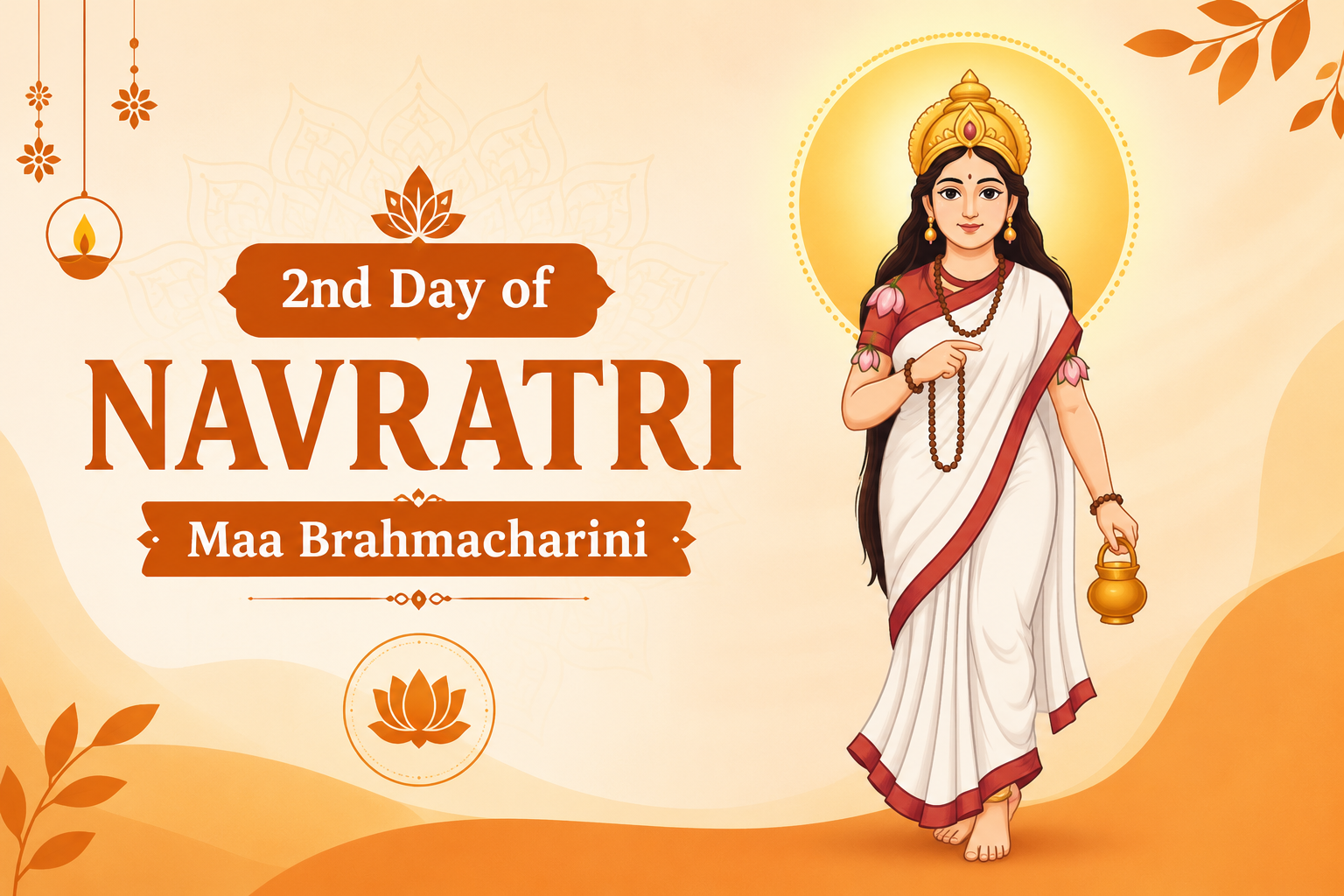
Maa Brahmacharini is the second form of Goddess Durga. Her strict devotion, discipline, wisdom, and inner strength are exemplified, and it is the day of respecting this form of Goddess Durga on the 2nd Day of Navratri. It is believed to be a sacred occasion; it is used to unite with each other and to pray for knowledge, peace, courage and success from the Divine Mother.
This is a guide to the second day of Navratri, Maa Brahmacharini, covering her full story (Katha), not only its spiritual significance, but also its symbolism, Puja Vidhi, mantra, Bhog, favourite flowers and associated colour.
Maa Brahmacharini – Navratri Day 2 2026
Maa Brahmacharini, the second divine manifestation of Goddess Durga, will be worshipped on 12 October 2026.
Who Is Maa Brahmacharini?
The second form of Goddess Durga — worshipped during the nine auspicious days of Navaratri is Maa Brahmacharini. She represents fervour, sincerity, integrity, offering, and tenacity. Her name reveals her divinity and her great significance.
The word Brahmacharini is derived from two Sanskrit words:
- Brahma – Divine knowledge, spiritual truth, and supreme consciousness.
- Charini – One who follows or practices.
Maa Brahmacharini translates as “the Goddess who traverses the path of divine knowledge” or “the Goddess who follows the path of penance.”
| Aspect | Details |
|---|---|
| Name | Maa Brahmacharini |
| Form | Second form of Goddess Durga (Navdurga) |
| Worshipped On | Second Day of Navratri |
| Represents | Devotion, wisdom, patience, self-discipline, and spiritual growth |
| Incarnation | Ascetic form of Goddess Parvati |
| Known For | Intense penance to attain Lord Shiva |
Why is Maa Brahmacharini Worshipped on the Second Day of Navratri?
The second day signifies the importance of discipline and perseverance in one’s spiritual and worldly journey.
The Bhagavati deity teaches several valuable lessons to the devas, such as:
- Remaining patient during difficult times.
- Maintaining faith in divine guidance.
- Practising self-discipline and devotion.
- Seeking the knowledge and wisdom.
- Staying committed to one's goals despite challenges.
- Creating peace and balance in the heart and mind.
Her devotion makes her understand that the only way to make something happen and to grow spiritually is through research and sincere efforts.
Complete Story (Katha) of Maa Brahmacharini
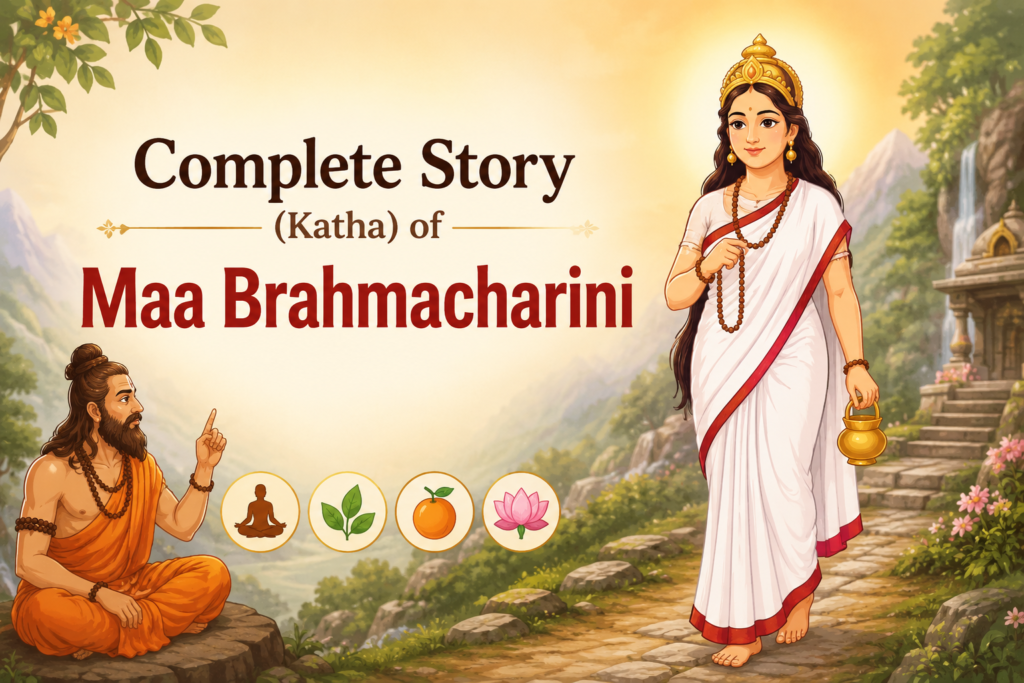
In Hindu mythology, the ascetic form of Goddess Parvati, daughter of King Himavan and Queen Maina, is known as Maa Brahmacharini. She was taught by Lord Sage Narada that Lord Shiva should be her husband. She resolved to do this Divine work and, through penance (Tapasya), spent a large number of years without eating or drinking, giving up worldly enjoyments entirely for Meditation and Spiritual discipline.
In addition to her penance of fasting, she survived on fruits and flowers, after which she survived on leaves and at the end she made a great period of fasting. Her faithfulness, bravery, and perseverance, rather than comfort, won the admiration of the gods and sages.
Spiritual Significance of Maa Brahmacharini
Maa Brahmacharini is considered to be one of the most powerful manifestations of the Goddess Durga. She is a representation of divine wisdom and instructs people that change comes from the inside.
Her worship is rich in religious symbolism, and it has a great impact on millions of believers.
1. Symbol of Divine Devotion
The strongest message that Maa Brahmacharini bestowed was devotion. Her life was an example of the power of faith and commitment in the face of the toughest challenges.
Her devotion towards Lord Shiva reflects:
- Commitment.
- Patience.
- Sacrifice.
- Spiritual determination.
She serves devotees so they do not lose faith in the tough times of their lives.
2. Represents Inner Strength
To many people, power and courage are synonymous with strength. Maa Brahmacharini says that intense power is the one that whispers.
Inner strength means:
- Remaining calm during adversity.
- Making righteous decisions.
- Practising self-control.
- Having patience during difficult circumstances.
It is believed that her blessings impart mental and emotional stability in the observance of her religion.
3. Symbol of Knowledge and Wisdom
Brahmacharya is intertwined with the pathway of Learning, spirituality, and self-awareness.
Pilgrims pray to Mahashaktimata "Maa Brahmacharini" for blessings about:
- Academic excellence.
- Professional success.
- Wisdom in decision-making.
- Spiritual enlightenment.
- Intellectual growth.
Her prayers for clarity and knowledge are sought after by students, professionals, and those seeking Spiritual knowledge.
4. Represents Determination and Perseverance
There are many difficulties and uncertainties in today's life. Maa Brahmacharini encourages all their admirers not to quit the path of their aspirations and goals in life.
Her teachings encourage us to:
- Stay focused.
- Practise discipline.
- Believe in divine timing.
- Continue moving forward despite setbacks.
Her incarnational form beautifully reminds us that whatever it is, if we are determined to achieve it, success follows the path.
Read Also: Dussehra 2026 Date: Vijayadashami Timing & Significance
Maa Brahmacharini Puja Vidhi (Step-by-Step Worship Method)
On the second day of Navratri, worshipping Maa Brahmacharini is believed to instil spiritual peace, wisdom, determination, prosperity, and all other good things in the devotee. In holding her puja with a good intention and with devotion, their staunch belief is that it either brings a good advantage to life or seeks her blessings for a harmonious and successful life.
Rituals in each region and in different families may differ slightly in the performance. However, the following puja vidhi is often followed during Navratri.
Step 1: Begin Your Day with Purity
- It is desirable to get up early in the Brahma Muhurta (before dawn).
- Take a bath and change your clothes.
- On this auspicious day, most devotees like to wear white coloured clothes.
Navratri worship is based on the notion that cleanliness, in both physical surroundings and mentality, is important.
Step 2: Prepare the Puja Altar
Prepare the following things before the puja:
- Idol or image of Maa Brahmacharini
- Kalash (sacred vessel)
- Flowers and garlands
- Kumkum and sandalwood paste
- Akshat (rice grains)
- Incense sticks
- Diya (oil lamp)
- Fruits and sweets
- Mishri (rock sugar)
- Panchamrit
- Sacred water
- Betel leaves and coconut (optional according to traditions)
Lighting a diya symbolises the removal of darkness and the arrival of divine blessings.
Step 3: Invoke Maa Brahmacharini
Begin the puja by offering flowers while meditating upon Maa Brahmacharini's divine form.
Pray sincerely and seek blessings for:
- Wisdom
- Peace
- Prosperity
- Spiritual growth
- Mental strength
- Family harmony
Devotees may also make personal prayers while expressing gratitude for life's blessings.
Step 4: Offer Sacred Items
Offer the following respectfully:
- Fresh flowers
- Kumkum
- Sandalwood paste
- Fruits
- Mishri
- Sugar
- Panchamrit
- Sacred water
Every offering represents purity, devotion and thankfulness for the Divine Mother.
Step 5: Chant Sacred Mantras
Devotees offer prayers and recite their sacred mantras named after Maa Brahmacharini, and they meditate on her divine qualities.
Many devotees also recite:
- Durga Saptashati
- Devi Kavach
- Navadurga Stotram
- Navratri Aarti
Of course, chanting of the mantra throughout Navratri is thought to bring positivity and spiritual harmony.
Step 6: Perform the Aarti
Offer the sacred flame while singing the Navratri Aarti with devotion.
During the Aarti, devotees pray for:
- Peace and happiness
- Protection from negativity
- Success in righteous endeavours
- Spiritual awakening
Maa Brahmacharini Wishes for Navratri Day 2
Maa Brahmacharini's Favourite Bhog
Giving the bhog represents being thankful, loving and devoting oneself towards the Divine Mother. Maa Brahmacharini is traditionally offered simple and sattvic foods, which symbolise purity and simplicity.
Mishri (Rock Sugar)
Mishri is regarded as one of the auspicious gifts to offer to Maa Brahmacharini.
It symbolises:
- Sweetness in life
- Happiness
- Harmony
- Positive relationships
There is a lot of faith amongst the devotees that they can welcome peace and prosperity into their lives by offering Mishri.
Sugar
Another old ritual during the second day of Navaratri is giving sweets (sugar).
It signifies:
- Contentment
- Divine blessings
- Joy and fulfilment
Fruits
Fresh fruits symbolise:
- Purity
- Good health
- Gratitude towards nature
- Spiritual abundance
Popular offerings include:
- Apples
- Bananas
- Pomegranates
- Grapes
- Seasonal fruits
Panchamrit
Panchamrit is prepared using:
- Milk
- Curd
- Honey
- Sugar
- Ghee
It is considered one of the most sacred gifts of Hindus while performing any worship function.
Kheer
Some devotees also prepare:
- Makhana Kheer
- Sabudana Kheer
- Dry Fruit Kheer
These are usually all made during the Navratri fasting period in accordance with traditional eating styles during the fasting period.
Read Also: Best Diwali Quotes & Captions for 2026 Celebrations
Final Words
Day 2 of Navratri is a glorious day of dedication, discipline, and spiritual enlightenment. Strength is not the only thing in this world; Maa Brahmacharini tells us to be strong in the sense of being patient, compassionate, and steadfast at all stages of life.
Her journey to the sacred is a testament to the power of faith and perseverance to change lives. Through her divine teachings, devotees strive to develop wisdom, positivity, humility, and inner peace to walk the path of righteousness.