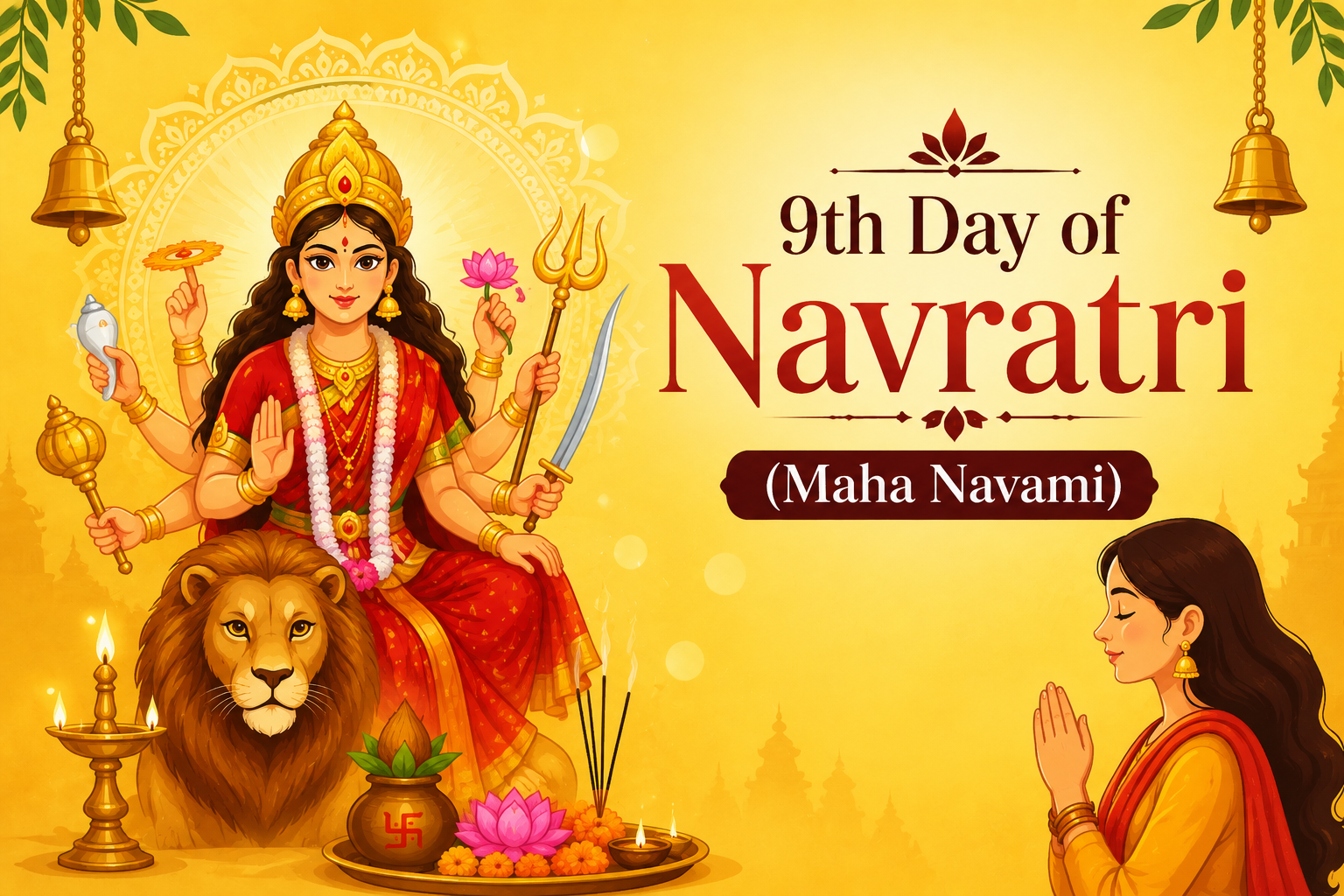
9th Day of Navratri 2026: Maha Navami Date, Puja & Significance
Maha Navami is 9th day of Navratri described in 2026 was celebrated on October 19. This is the last day of the Sharad Navratri festival. This is day 9 and the last day of the 9-day Sharad Navratri festival. In the Navadurga tradition, the worship of Goddess Siddhidatri is done on the ninth day of Navratri Day 9 and the following traditions may specially appreciate Durgadeviji (Goddess Durga) as Mahishasuramardini.
In this comprehensive guide, you will find information on the auspicious date of Maha Navami 2026, the 9th Day of Navaratri, worship of the Goddess, significance, the Puja Vidhi, Puja Samagri, Kanya Puja, fasting rules, and wishes for Maha Navami, along with various important FAQs.
9th Day of Navratri 2026 – Maha Navami
Mahanavami or Maha Navami is the 9th day of Sharad Navratri. It's the final day of the nine-day Navratri worship and right before Vijayadashami/Dussehra for the traditions where Navratri ends with Dashami.
Maha Navami is a day marked by increased devotion and veneration of Shakti, or the divine feminine energy, for the devotees. It is also the day when many families fulfill their Navaratri puja, perform Kanya puja, arrange special bhog, and get ready for Vijayadashami on the same day.
| Detail | Information |
|---|---|
| Festival | Sharad Navratri |
| Day | 9th Day |
| Name | Maha Navami / Mahanavami |
| Year | 2026 |
| Date | Monday, October 19, 2026 |
| Goddess | Goddess Siddhidatri in the Navadurga tradition |
| Associated form | Goddess Durga / Mahishasuramardini in relevant traditions |
Maha Navami 2026 Date
Maha Navami will be observed on October 19, 2026.
Therefore, if you do the puja to capture the exact puja timings on Maha Navami, you need to check the Hindu calendar for your city and not take it for granted that the same timings are followed all over.
Significance of Maha Navami
Maha Navami is also an important day because it marks the end of the nine days of the worship of Navaratri. It is a religious, spiritual, and cultural day for the devotees of Goddess Durga.
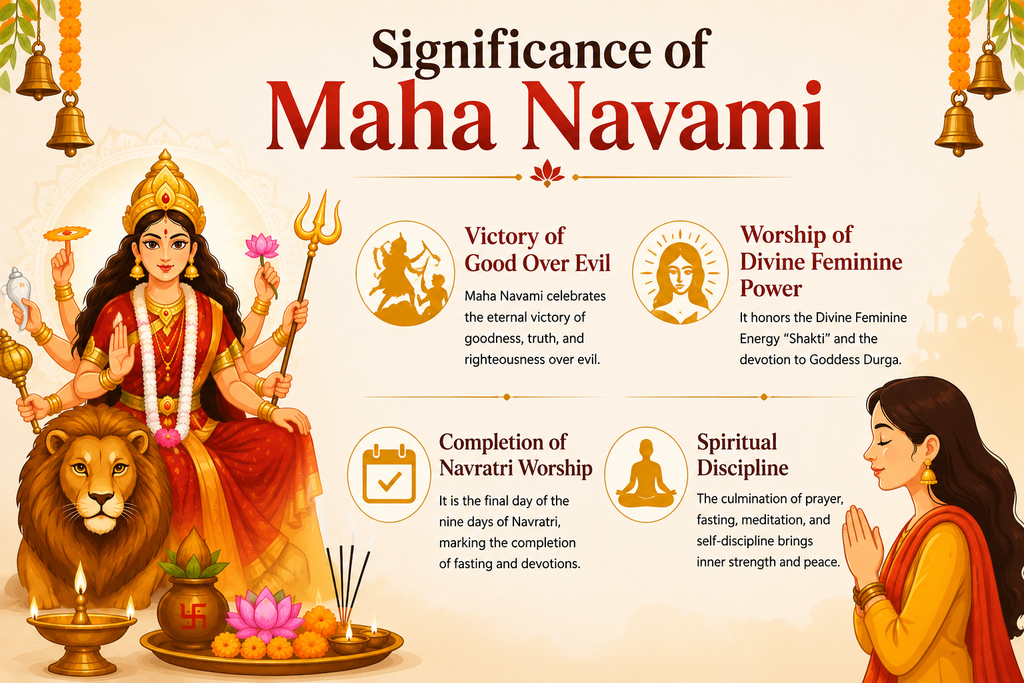
Victory of Good Over Evil
The fight between the good and the bad is one of the ideas that is associated with Goddess Durga.
Worship of Divine Feminine Power
Navratri is the celebration of the Divine Feminine Energy “Shakti”. The last component of the worship is the devotion during Maha Navami.
The day is for worshippers to give thanks to the Goddess and pray for strength, wisdom, abundance, and growth in spirit.
Completion of Navratri Worship
Maha Navami is the final day of the main nine days of Navaratri. This is when many people end their periods of fasting and devotion, depending upon family tradition.
Spiritual Discipline
The nine days of Navratri are an ideal time to pray, fast, meditate, learn self-discipline, and take out any devotion. This culmination of these practices is called Maha Navami.
Is Kanya Puja Done on Maha Navami?
In those traditions that have Navami as a favoured day for Kanya Puja, of course, Kanya Puja can be done on the day of Maha Navami. It is not, however, universal and exclusive to Navami. Most families carry out Kanya Puja on the Ashtami day, and some families on the Navami day.
Maha Navami Fasting Rules
Some people strictly adhere to the fast, and others follow a water-only, milk, juice, or allowed foods diet: fruits, milk, nuts, or special fast juices.
Some traditions have these as common foods for fasting:
- Fruits
- Milk
- Curd
- Nuts
- Sabudana
- Kuttu flour
- Singhara flour
- Certain root vegetables
In case of fasting, adhere to your family practice or ask for a religious leader's direction. Fasting may not apply to everyone; if it won't suit, then a strict religious fast is not obligatory. Always take care of health and safety.
Maha Navami Wishes and Messages
Maha Navami is also a favorite time to exchange religious messages with family and friends.
Here are a few original messages you can share:
1. May Goddess Durga shower her strength, wisdom, courage, peace, and prosperity upon you on the auspicious occasion of Maha Navami. Happy Maha Navami!
2. May the divine blessings of Maa Durga take negativity away from you and bring happiness into your home. May this Maha Navami be a time of you Blessing.
3. On this sacred Maha Navami, may Goddess Siddhidatri bless you with spiritual strength, success, and inner peace. Happy Navratri!
4. May the light of devotion illuminate your path, and may you be happy with the blessings of Maa Durga in your family.
5. Wishing you and your loved ones a peaceful, prosperous, and spiritually blessed Maha Navami.
Frequently Asked Questions (FAQs)
What is the 9th day of Navratri called?
The 9th day of Navratri is called Maha Navami or Mahanavami. This is the last day of the Sharad Navratri or Dussol for the nine days.
When is Maha Navami in 2026?
Maha Navami will be observed on October 19, 2026. Specific time schedules of exact pujas can vary slightly according to the locality, as it depends on the nature of the celebration of Hindu festivals.
Who is the goddess on the 9th day of Navratri?
According to the “Navadurga” tradition, Day 9 is devoted to the worship of Goddess Sidhidatri (nava Durga or 9th Durga Devota Santi).
What does Maha Navami Puja celebrate?
The worship of navami puja held on the ninth day of Navaratri. It may include calling the Goddess, placing flowers, bhog, mantra chanting, or Aarti.
Read Also: Who Celebrates Diwali Worldwide? Top Countries Guide
Final Thoughts
Maha Navami is the 9th Day of Navratri 2026, which falls on 19th October 2026, and is an auspicious day with profound religious significance for both the people of India and those abroad. It is traditionally related to Goddess Siddhidatri is one of the nine forms of Navadurga, and Goddess Durga is also central to the Durga Puja festival as Mahishasuramardini. The day marks the end of the nine-day celebration of Shakti through her own devotions, prayers, fasting, and worship.
The festive day of this holy day is celebrated in ways that may vary depending on the region and the family, ranging from Maha Navami Puja to Kanya Puja, from Homa to Bhog, or Fasting and Prayer.