
Importance of Lakshmi Puja: Significance, Benefits & Meaning
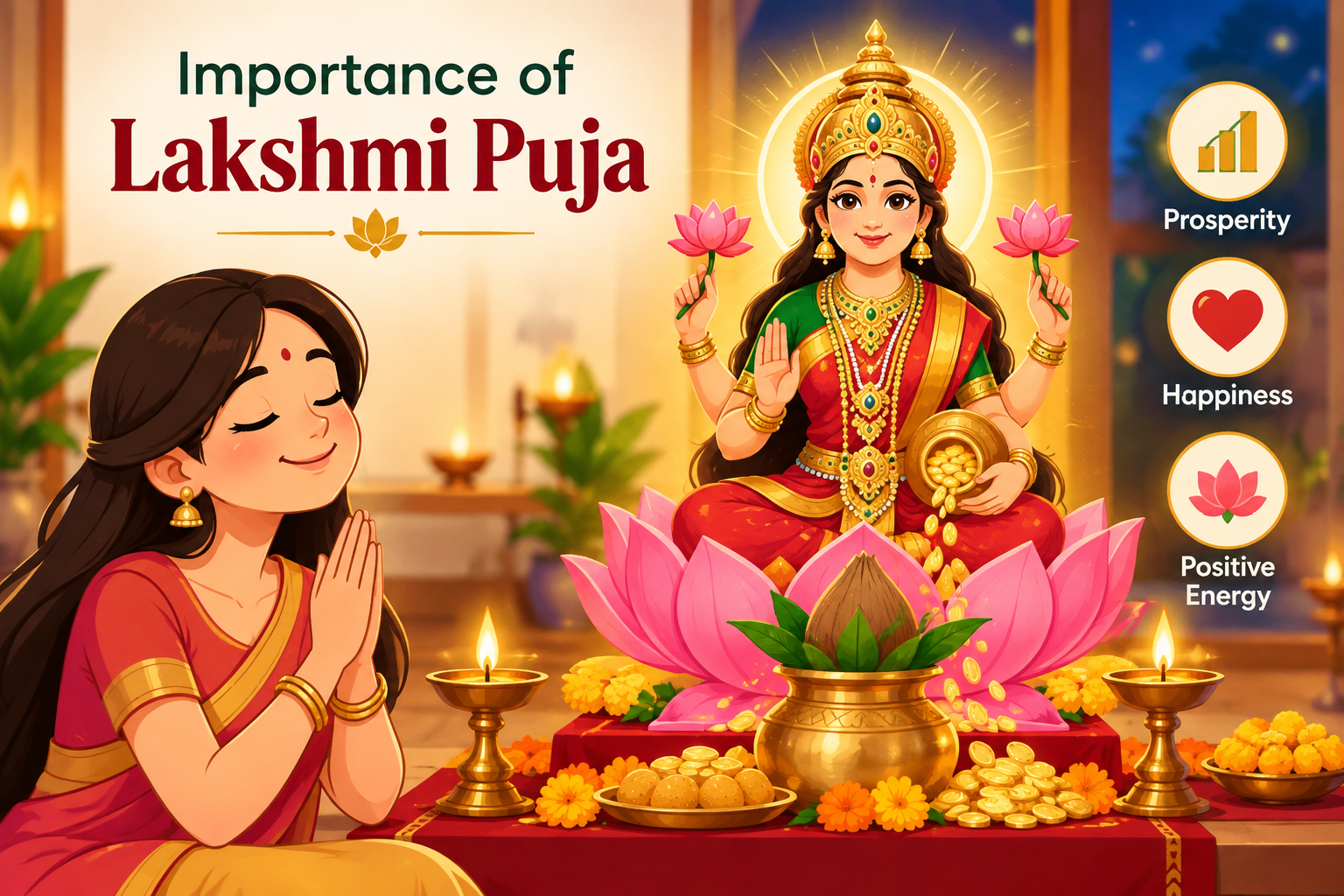
Have you ever wondered why Lakshmi Puja is so important, especially during Diwali? Lakshmi Puja is a traditional Hindu worship ceremony dedicated to Goddess Lakshmi, who is widely associated with wealth, prosperity, abundance, fortune, and auspiciousness. During Diwali, devotees perform Lakshmi Puja to express gratitude for their blessings and seek prosperity, peace, success, and well-being for themselves and their families.
It explains the significance and relevance of this Lakshmi Puja, its beliefs and its culture — why it is celebrated during Diwali, what the traditional benefits and answers to frequently asked questions.
What Is Lakshmi Puja?
Lakshmi puja is the name of the Hindu worship ceremony which is held in the name of Goddess Lakshmi, who is believed to be a Goddess of wealth, abundance, auspiciousness, prosperity, and luck.
A puja is most popularly celebrated on the Diwali Festival – the festival of lights amongst the Hindu community. On the main night of the Diwali celebration, i.e., when the Puja is performed, lighting of diyas, drawing of rangoli, and preparation of the Puja are commonly observed activities to honour the various celebrations of gods and goddesses related to Lakshmi Puja.
Importance of Lakshmi Puja?
Lakshmi Puja holds significance as it is an old tradition for the devotees to show prayers to Goddess Lakshmi, the Goddess of auspiciousness, luck, abundance, and prosperity. Devotees celebrate Diwali by performing Lakshmi Puja in order to pay due respect to God, to Devi Lakshmi, to wish good health, good fortune, and to start off the new month with good thoughts and good intentions.
On a cultural level, it has helped to maintain family unity, cleanliness, and organisation, and to pass along the tradition of years.
How Is Lakshmi Puja Traditionally Performed?
This will vary based on the area, family traditions, and the individual’s religion. However, in a regular home ceremony, the procedures for doing a simple Lakshmi Puja would be as follows:
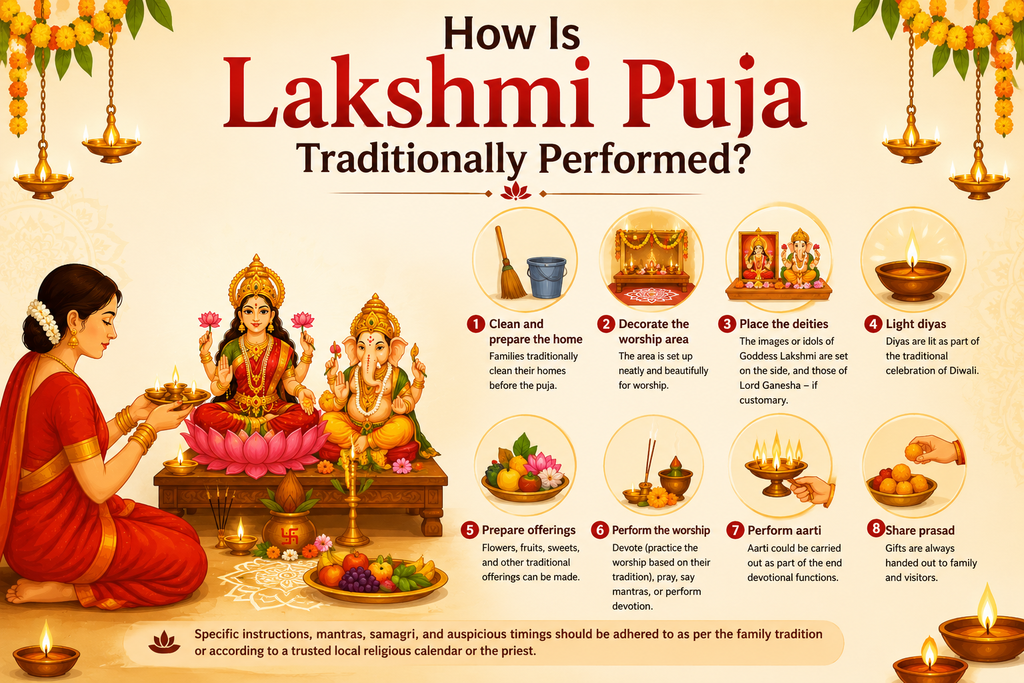
- Clean and prepare the home: Before the puja, the family traditionally cleans up their houses.
- Decorate the worship area: The worship area is nicely and beautifully decorated.
- Place the deities: Idols of “Goddess Lakshmi” are placed on the sides, and the image or idol of “Lord Ganesha”.
- Light diyas: Diyas are lit as part of the celebration of the traditional Diwali.
- Prepare offerings: These items can be prepared, such as flowers, fruits, sweets, etc.
- Perform worship: Devotees practice worship based on their tradition, pray, say mantras, or perform devotion.
- Perform aarti: Aarti could be carried out as part of the end devotional functions.
- Share prasad: Gifts are always given to family and visitors.
Specific instructions should be followed as per family tradition or follow a trusted local religious calendar or priest’s Arkbheda.
What is the Importance of Lakshmi Puja?
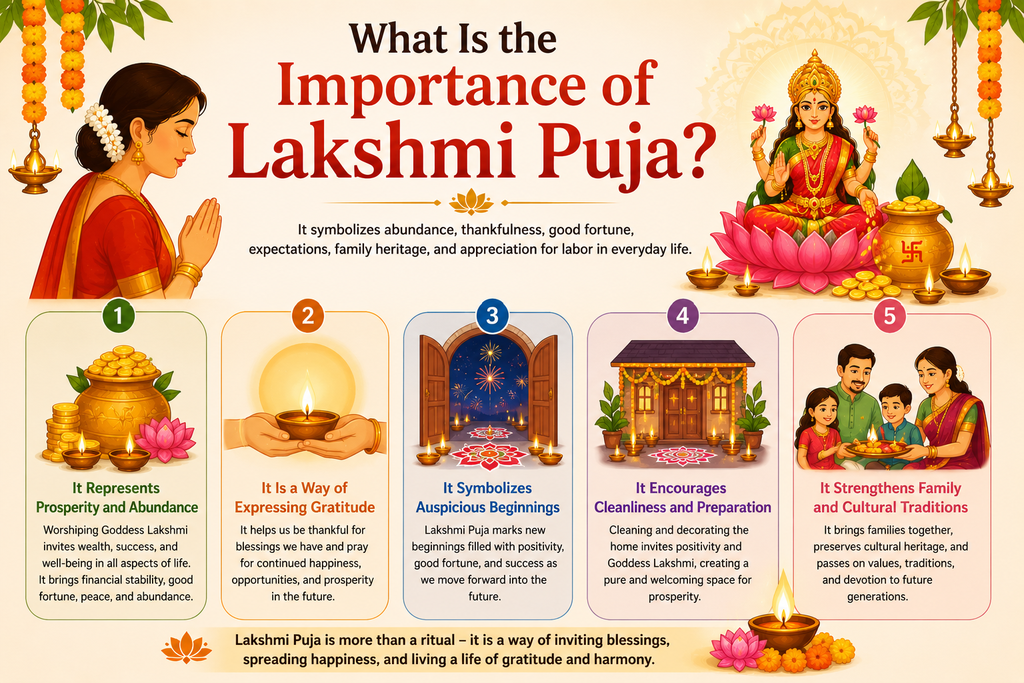
1. It Represents Prosperity and Abundance
There is a wide recognition of the goddess Lakshmi as a deity of wealth, fortune, and prosperity. Worshiping Lakshmi can represent the hope of financial well-being, success, wealth, and “household sanctuary”, as believed by the devotees.
But being successful is not necessarily financial success. According to the more traditional definition, prosperity is defined as:
- Financial stability
- Food and nourishment
- Success in work or business
- Family well-being
- Opportunities
- Good fortune
- Peace and harmony
- Abundance and contentment
This increased awareness enables Lakshmi Puja to overcome economic concerns.
2. It Is a Way of Expressing Gratitude
Lakshmi Puja can also be related to thanksgiving.
Although prayer for future blessings can be made, a ceremony can be used to consider any blessings that have already been granted to them: an opportunity, a resource, a relationship, a job, food, or a blessing in their life. This puts the practice into more than a request for material gain. Now, stop, think, and enjoy the richness already there.
Many families look to the Diwali festival as a big occasion to say thanks for many things.
3. It Symbolizes Auspicious Beginnings
There is a close connection between Lakshmi Puja and auspiciousness and positive beginnings.
Diwali is itself an important festival, as more people are using this festival time to look back on the year gone by and wish to cross over to the future. During this period, it is believed that worshipping Goddess Lakshmi brings good fortune, peace, and success, literally.
4. It Encourages Cleanliness and Preparation
The home prior to the start of Lakshmi Puja is one of the rituals of a household.
Families could arrange the puja area, decorate the entrance to their house, create and make rangoli designs, clean and tidy their home, allowing their surroundings to be filled with diyas. Cleanliness and preparation are traditionally related to the concept of bringing in auspiciousness and Goddess Lakshmi in a properly arranged house.
Diwali is the time when families redo their houses, arrange their environment, adorn their homes, and prepare in partnership during the festival.
5. It Strengthens Family and Cultural Traditions
Lakshmi Puja is more of an occasion to come together as a family.
Any member of the extended family circle – even brothers or sisters, uncles or aunts, nephews or nieces, or anyone else – can help to clean, decorate, prepare offerings, light the diyas, pray, and share prasad along with the parents, children, and grandparents.
What Do the Main Lakshmi Puja Rituals Symbolize?
Many familiar Lakshmi Puja practices have symbolic meanings. The exact rituals differ among communities, but several traditions are widely recognized.
| Ritual or Symbol | Traditional Meaning |
|---|---|
| Cleaning the home | Preparation, cleanliness, and auspiciousness |
| Lighting diyas | Light, hope, and the removal of darkness |
| Rangoli | Decoration and auspiciousness |
| Flowers | Devotion and offering |
| Sweets | Celebration, happiness, and sharing |
| Kalash | Auspiciousness and abundance |
| Lakshmi image or idol | Focus of devotion and worship |
| Ganesha worship | Auspicious beginnings and removal of obstacles |
| Aarti | Devotional expression and conclusion of worship |
Frequently Asked Questions (FAQs)
Why is Lakshmi Puja important?
There are several reasons for Lakshmi Puja; people believe that they ask for good luck for them, wealth, happiness, and welfare during this time, known as Diwali.
Why do we worship Goddess Lakshmi on Diwali?
Goddess Lakshmi is traditionally associated with prosperity and auspiciousness. Devotees worship her during Diwali to seek blessings for a prosperous and positive future.
What does the meaning of Lakshmi Puja tell?
Lakshmi Puja is to display devotion, gratitude, hope, and positive intentions.
What does Lakshmi Puja symbolize?
Lakshmi Puja is the condition of prosperity, abundance, good fortune, auspiciousness, and thankfulness, as well as a beginning with positive effort.
What are the advantages of Lakshmi Puja?
Lakshmi Puja is generally performed with the object to invoke favor upon the family to get benefit such as happiness, prosperity, peace, wealth, and welfare.
Read Also: Best Diwali Wishes for Family & Friends in 2026
Final Thoughts
Lakshmi Puja has much more meaning than seeking money. It represents wealth, happiness, gratitude, faith, hope, auspiciousness, family bond, culture, and is a symbol of the joy it brings to millions of people. Diwali is a time to reflect on the things for which we are grateful in our life, and hope that the coming year will bring us more of the same.
Lakshmi Puja can be very personal and very significant, whether it’s performed at a large function orit’se performed at home.

